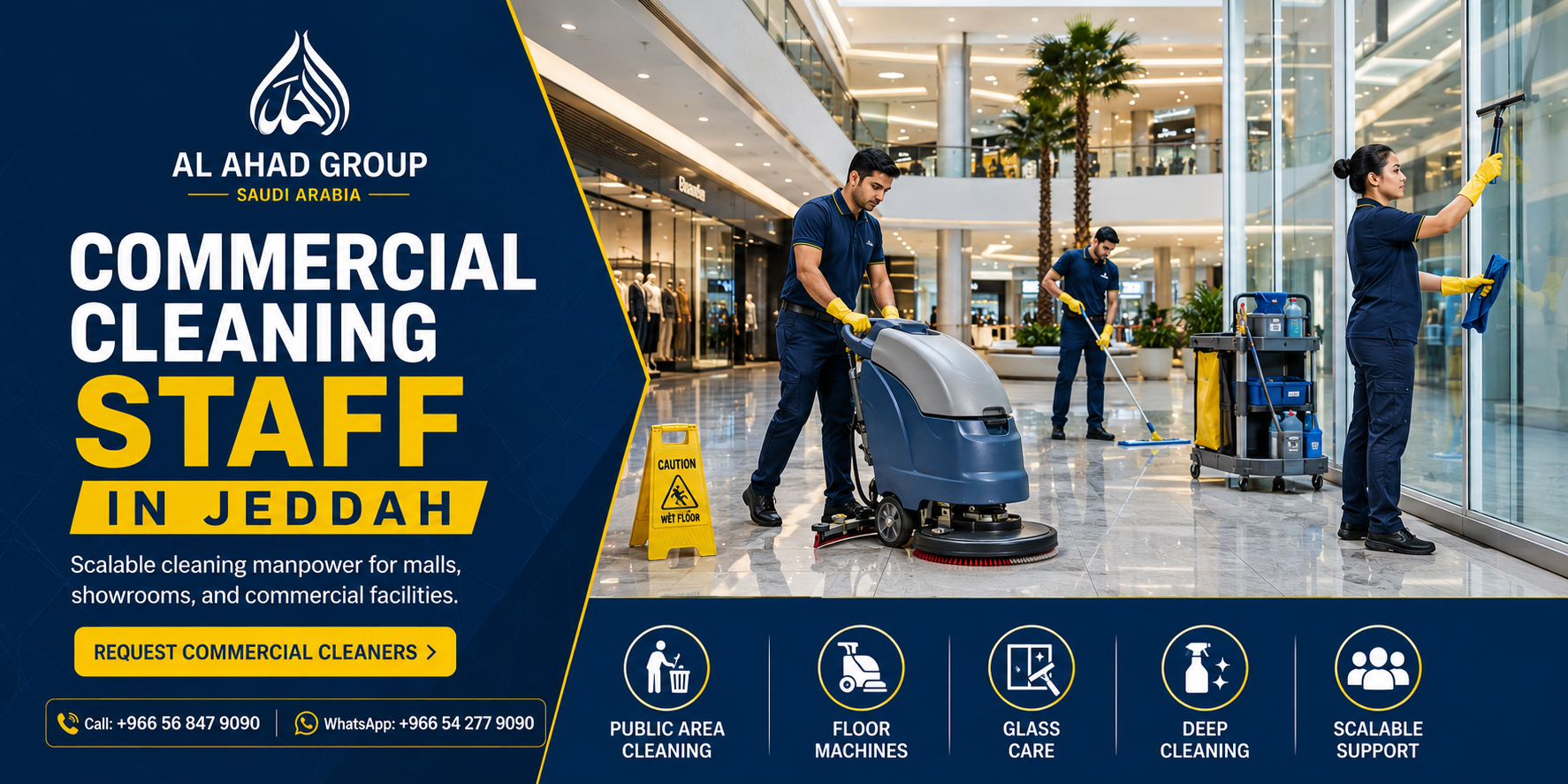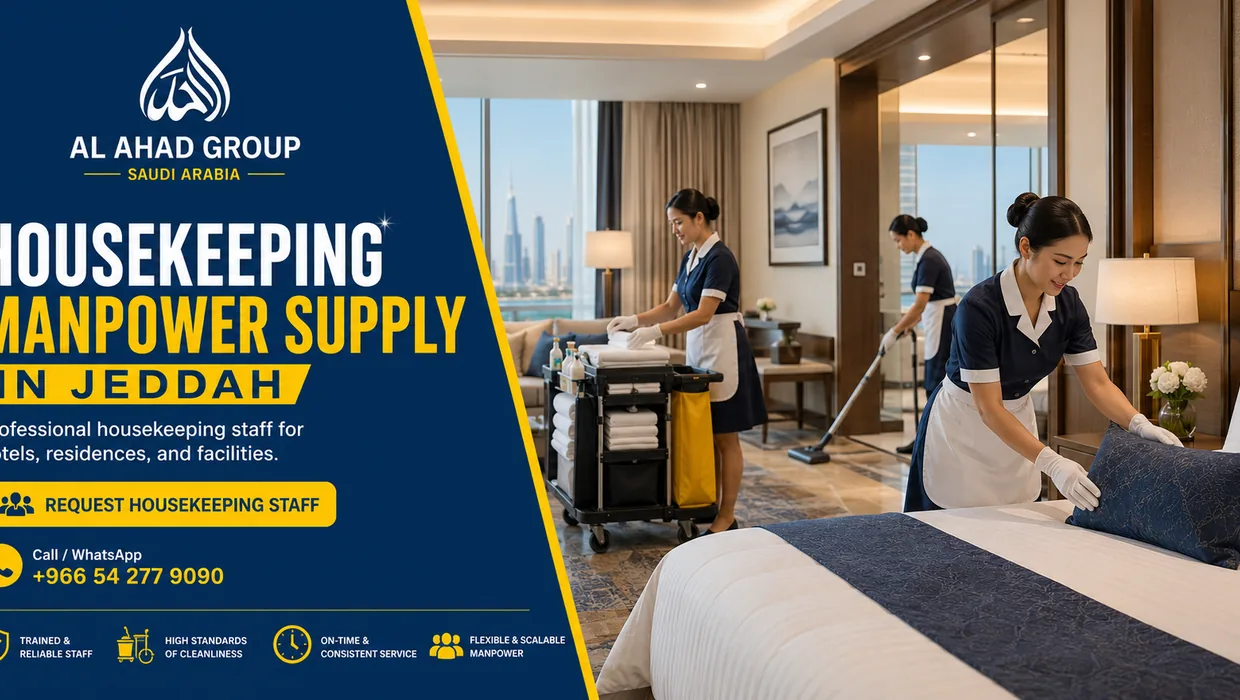
When a site is short on cleaners, the problem shows up fast. Missed hygiene standards, delayed handovers, tenant complaints, and extra pressure on supervisors all start piling up. That is why many employers ask, how does cleaning manpower supply work in Jeddah? This step-by-step guide explains the actual process, what happens behind the scenes, and what businesses should expect when using an external manpower supplier.
For operations managers, employer teams, facility supervisors, and business owners, cleaning manpower supply is not just about sending workers to a site. It is a structured staffing model that helps companies fill urgent or ongoing cleaning roles without carrying the full burden of sourcing, screening, onboarding, and managing labor availability on their own.
What cleaning manpower supply means for businesses
In simple terms, cleaning manpower supply means a company sources cleaning workers through a manpower provider instead of hiring every cleaner directly through its own internal HR process. The workers may be supplied for short-term assignments, long-term contracts, room and public-area roster continuity, seasonal demand, project-based cleaning, or 24/7 operations.
This model is common in commercial buildings, residential compounds, hospitals, retail spaces, warehouses, hospitality operations, factories, schools, and facility management environments. In Jeddah, where businesses often need quick labor support, manpower supply helps reduce downtime and keeps operations moving.
The main advantage is speed. A business can request a specific number of cleaners, often with clear shift timing, duty scope, and site conditions, and the manpower supplier handles the sourcing and deployment process. If your company is reviewing whether outsourcing makes sense at all, this related article on why Jeddah companies outsource cleaning manpower gives useful context.
Step 1: The client shares its cleaning manpower requirement
The process starts when the employer defines the need. This is the most important stage because unclear requirements usually lead to delays, mismatched workers, or underperformance on site.
A serious manpower request usually includes the number of workers needed, the site location, duty hours, weekly off pattern, contract duration, cleaning scope, required experience, language needs, gender preference if operationally relevant, and whether supervisors or team leaders are also required. Some clients need general cleaners for routine housekeeping. Others need staff for deep cleaning, waste handling, hospitality support, post-construction cleaning, or public area maintenance.
This stage also helps identify urgency. Some requirements are planned a week or month ahead. Others are same-day or next-day needs because of absenteeism, sudden contract wins, inspections, or high occupancy periods.
Step 2: The manpower supplier reviews the scope and staffing model
Once the requirement is received, the manpower supplier checks whether the request is for temporary support, contract staffing, shift-based supply, or long-term outsourced labor. This matters because the pricing, worker availability, supervision level, and deployment timeline may differ.
For example, a hotel may need housekeepers for daily operations, while a warehouse may only need cleaners for fixed evening shifts. A facility management company may require full teams across multiple sites. A supplier that understands these differences can recommend the right model instead of just sending available labor.
This review stage also covers worker-to-task fit. Not every cleaner is suited for every environment. Cleaning in a corporate office is different from cleaning an industrial site, a healthcare setting, or a retail mall. Site conditions, tools, chemicals, reporting expectations, and physical demands all affect selection.
Step 3: Candidate sourcing and pre-screening begin
After the requirement is confirmed, the supplier starts matching available workers or sourcing new candidates from its database and recruitment channels. This is where an experienced manpower company saves the client the most time.
Pre-screening usually focuses on work readiness, basic cleaning knowledge, physical fitness for the assignment, attendance reliability, previous site exposure, and ability to follow instructions. Depending on the role, screening may also include language capability, shift flexibility, grooming standards, and familiarity with machines or cleaning materials.
For employers, this is one of the biggest benefits of the supply model. Instead of interviewing large numbers of applicants for routine labor positions, the client receives workers who have already passed an initial filter. Businesses looking specifically for ready cleaning teams can also review housekeeping and cleaning staff supply in Jeddah KSA for a closer view of this service category.
Step 4: Compliance and document checks are handled
In Jeddah and across Saudi Arabia, labor supply is not just an operational issue. It is also a compliance issue. Reputable manpower suppliers verify worker documents, employment status, and deployment eligibility before assigning staff to a client site.
This reduces risk for the employer. It also matters for larger companies and contractors that need auditable workforce processes. In practice, compliance checks may include ID and residency verification, work status review, medical fitness where required, and any client-specific onboarding requirements.
This step is often underestimated until a business faces a documentation issue, site access problem, or labor inspection concern. That is one reason companies prefer established staffing partners instead of informal hiring channels.
Step 5: Shortlisting, approval, and deployment planning
Once suitable workers are identified, the supplier confirms availability and prepares them for deployment. In some cases, the client wants to approve profiles first. In other cases, especially in urgent cleaning support, the client only wants workers who meet the requested criteria and can report immediately.
Deployment planning usually includes reporting location, shift timing, transport arrangements if applicable, uniforms, site instructions, supervisor contact details, and attendance procedures. If the requirement is large, workers may be deployed in batches rather than all at once.
This is where speed matters, but speed without coordination causes failure. Fast manpower supply only works when the workers arrive at the right place, at the right time, with the right job brief. That is why clients often prioritize suppliers with proven rapid workforce deployment services that work, especially when they need labor on short notice.
Step 6: Site onboarding and start of work
When workers reach the site, they are usually briefed on tasks, cleaning zones, reporting lines, safety expectations, and attendance rules. For some clients, the manpower supplier handles the initial orientation. For others, the site supervisor takes over after handover.
This stage sets the tone for performance. If onboarding is weak, even good workers can struggle. Clear instructions matter more than many employers realize, especially on large sites with multiple cleaning priorities.
The first few shifts are often used to check punctuality, work quality, discipline, and suitability. If a worker is not the right fit, replacement discussions usually happen early. A dependable supplier plans for that possibility and responds quickly.
Step 7: Ongoing supervision, replacement, and scaling
Cleaning manpower supply does not stop once workers arrive. Good suppliers stay involved after deployment. That may include attendance tracking, worker replacement, adding extra staff during peak demand, handling no-shows, and responding to quality concerns.
This ongoing support is one of the reasons employers outsource cleaning labor instead of managing every staffing issue internally. If five workers are needed today and eight are needed next week, the supplier adjusts the headcount faster than a standard in-house hiring process in most cases.
There are trade-offs, of course. If a client gives vague instructions, changes shift requirements frequently, or expects specialist cleaning from general labor without proper briefing, results may fall short. Manpower supply works best when the scope is practical and communication is direct.
For companies that need round-the-clock support, multi-room and public-area roster continuity, or urgent replacement staff, Jeddah cleaning manpower supply 24/7 is often the most relevant model.
What affects cost and timelines
Not every cleaning manpower request moves at the same speed or price. Urgent demand, night shifts, remote locations, long duty hours, public-facing roles, and large-volume hiring can all affect cost and mobilization schedule.
So can the type of cleaner required. General housekeeping staff are easier to source than workers with machine handling experience, supervisor-level ability, or industry-specific exposure. Contract duration also matters. A long-term requirement may allow better planning and stronger workforce continuity, while urgent short-term demand can require faster allocation.
The best approach is to define the requirement clearly from the start. That reduces back-and-forth and improves the supplier's ability to send the right people quickly.
What businesses should look for in a supplier
A cleaning manpower supplier should be judged on responsiveness, worker readiness, consistency, and support after deployment. Fast replies alone are not enough. The real test is whether the supplier can provide suitable cleaners, replace underperforming workers, and maintain labor flow when demand changes.
It also helps to work with a company that understands the pressure on operations teams. When cleaning staff are missing, the issue is immediate. Delays affect hygiene, image, and site functionality. That is why many employers choose providers that focus on practical staffing delivery instead of lengthy recruitment cycles.
AL AHAD GROUP supports businesses in Jeddah and across Saudi Arabia with fast, job-ready manpower solutions for cleaning, facility support, and workforce outsourcing. Companies that need immediate staffing support can contact the team through WhatsApp or call at +966 56 847 9090, email info@alahadgroup.com, or visit https://www.alahadgroup-sa.com for service details.
The step-by-step process is simple when the supplier is experienced: define the need, confirm the model, screen the workers, complete compliance checks, deploy quickly, and stay ready to adjust. For busy businesses, that is often the difference between staffing stress and operational control.
AL AHAD GROUP WHATSAPP CHANNEL
Follow our WhatsApp channel for Jeddah recruitment, manpower, staffing, and hiring updates.