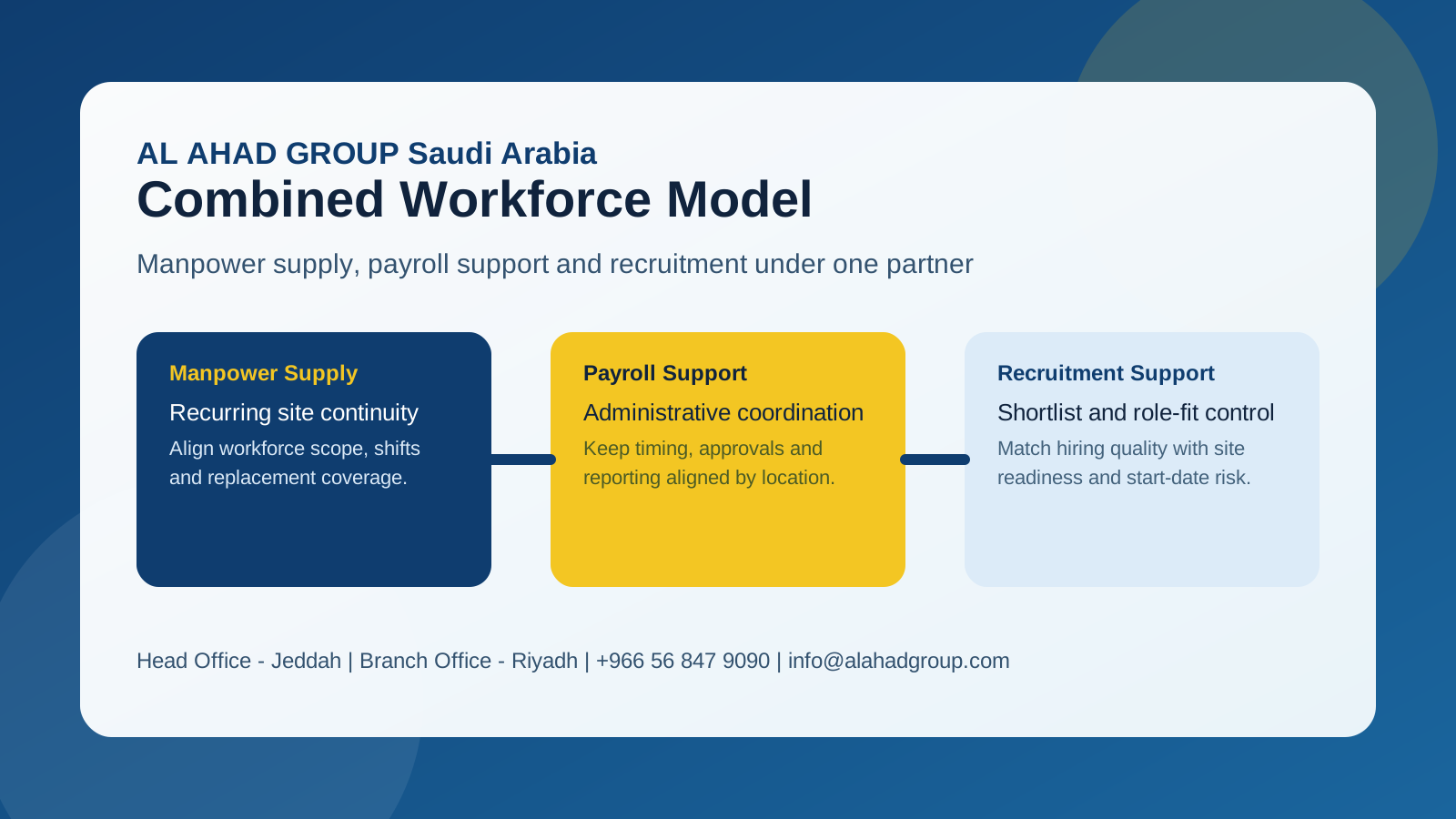
Workforce planning stays connected
The manpower requirement, recruitment brief, and payroll setup move through one practical path instead of being re-explained to different teams.
 AL AHAD GROUP
A practical request for How Saudi Employers Can Combine Manpower Supply, Payroll, and Recruitment Under One Partner starts with confirmed roles, quantities, duties, location, shifts, duration and acceptance criteria. Employers can use this page to review the relevant operating conditions, evidence and joining dependencies before sending the final requirement through the contact channel already published on the page.
Saudi employers often lose time when manpower supply, payroll support, and recruitment are handled as three separate tracks. Each handoff creates more approvals, slower worker movement, and less visibility on who is carrying responsibility when the workforce requirement changes.
A combined model works best when the employer wants one route for workforce planning, one route for category coordination, and one route for follow-through after deployment starts. The goal is to reduce friction while keeping worker categories, payroll responsibilities, and recruitment timing aligned.
The manpower requirement, recruitment brief, and payroll setup move through one practical path instead of being re-explained to different teams.
When one partner can see both staffing pressure and payroll implications, decisions can move earlier and with fewer avoidable delays.
Ongoing workforce support is easier to protect when the same operating route understands who joined, how payroll is being handled, and where service gaps may appear.
Recurring labor demand often benefits from one route that can handle workforce coordination, category continuity, and payroll rhythm together.
Cleaning teams, housekeeping staff, maintenance helpers, drivers, warehouse workers, and support crews often create ongoing needs that are easier to manage through one operating model.
Projects, new-site launches, or rapid operational growth can benefit from a combined route when several worker types must be mobilized and managed under one timeline.
Confirm whether the support needs to cover manpower supply only, payroll only, recruitment only, or a structured combination of all three.
Share worker categories, headcount, city, site location, shift timing, and whether the operation is facility-led, project-led, logistics-led, or mixed.
Clarify payroll scope, contract duration, start date, attendance expectations, reserve coverage, and how replacements should be handled.
Confirm the quotation route, payroll scope, contract duration and which worker categories are included in the starting commercial review.
Share city, site location, shift timing, site access, attendance flow and who the daily employer contact will be once deployment begins.
Clarify replacement expectations, reserve planning, expansion triggers and how urgent workforce changes should be escalated after the first start date.
Combining manpower supply, payroll support, and recruitment works best when it is linked to the broader Saudi workforce plan. The employer should still align the route with city coverage, project timing, contract staffing, workforce outsourcing, and the categories that matter most on site.
AL AHAD GROUP
Al Faisaliyah District, Jeddah, Saudi Arabia
Call: +966 56 847 9090
WhatsApp: +966 54 277 9090
Email: info@alahadgroup.com
AL AHAD GROUP
Riyadh, Saudi Arabia
Call: +966 56 847 9090
WhatsApp: +966 54 277 9090
Email: info@alahadgroup.com
Share the worker categories, headcount, city, contract duration, payroll scope, shift timing, and start date so AL AHAD GROUP can help shape the right combined support route for your Saudi workforce requirement.