Speed to workforce readiness
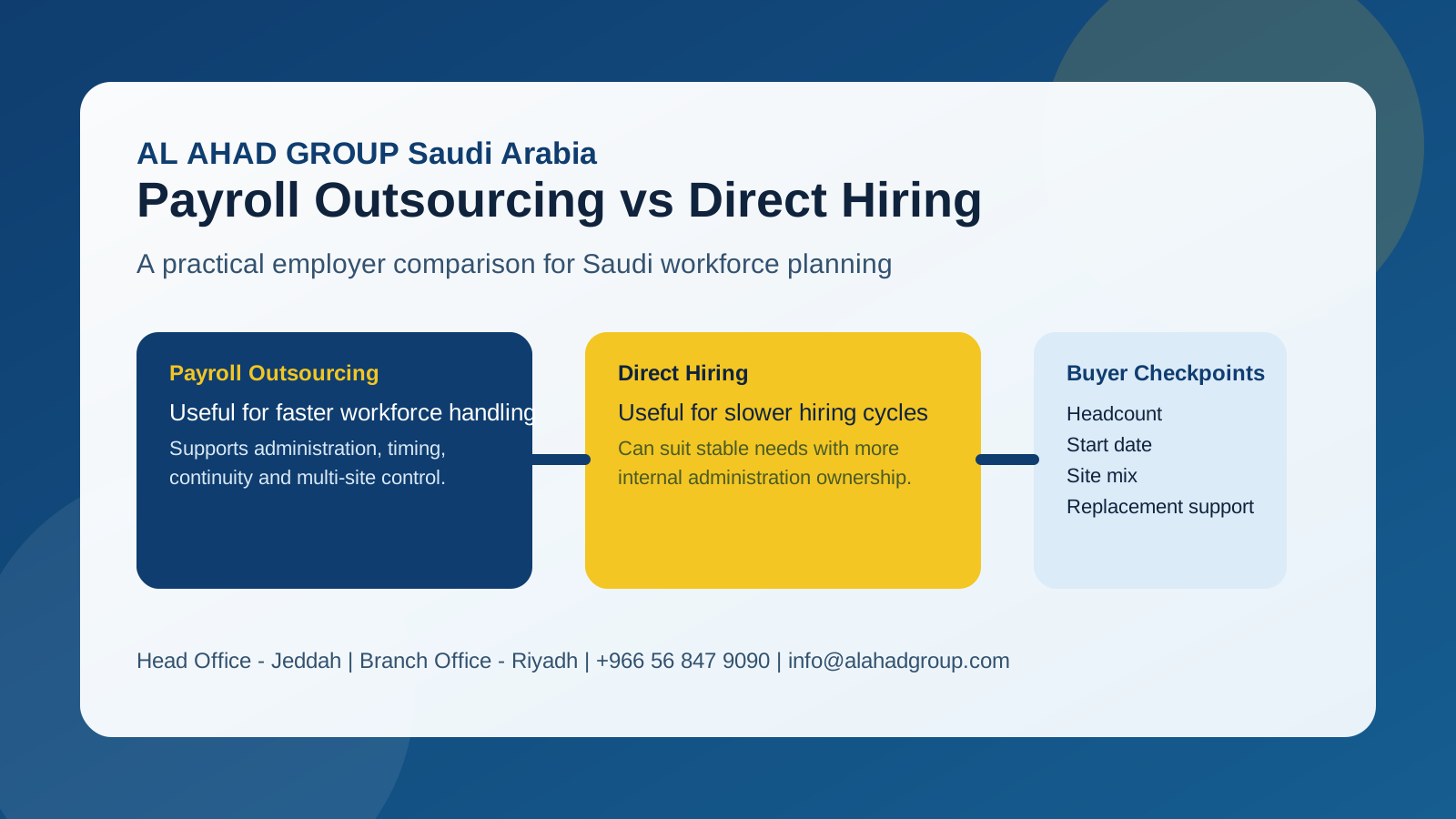
Direct hiring can suit roles that move on a slower schedule, but payroll outsourcing often fits better when start dates are close and workforce administration must stay organized from the beginning.
 AL AHAD GROUP
Saudi employers do not compare payroll outsourcing and direct hiring in theory. They compare them when headcount has to move, site dates are already fixed, and internal teams need a practical way to keep workforce administration under control. The better choice depends on speed, role mix, reporting pressure and how much workforce coordination the employer wants to carry internally.
This page is built for employers deciding whether payroll outsourcing supports the workforce requirement better than direct hiring, especially when the requirement spans projects, multi-site operations or recurring contract manpower demand.
Direct hiring can suit roles that move on a slower schedule, but payroll outsourcing often fits better when start dates are close and workforce administration must stay organized from the beginning.
Employers reviewing direct hiring should weigh the ongoing administration effort against a payroll outsourcing model that supports workforce continuity with less internal follow-up pressure.
Where manpower need is tied to project phases, recurring staffing windows or operational peaks, payroll outsourcing often gives clearer workforce handling than building every cycle through direct hiring alone.
Confirm whether the requirement covers contract manpower, project teams, temporary scale-up, or a mixed worker category plan across several roles and sites.
Share the city mix, site access conditions, shift timing, contract duration and start date so the workforce model matches real operating pressure.
Clarify who manages attendance follow-up, replacement support, site supervision and approval flow before choosing between payroll outsourcing and direct hiring.
Payroll outsourcing often becomes the stronger option when the workforce requirement is commercial, time-sensitive and operationally spread across several moving parts. Employers commonly prefer it when manpower has to start quickly, when several locations are involved, or when the internal team wants cleaner workforce administration without carrying every task alone.
That does not mean direct hiring is always the wrong route. It means the employer should choose based on workforce shape, timing and administration responsibility instead of defaulting to one approach for every requirement.
These routes give deeper coverage when the employer also needs support around manpower supply, project workforce coordination or recruitment planning across Jeddah, Riyadh or wider Saudi operations.
AL AHAD GROUP
Al Faisaliyah District, Jeddah, Saudi Arabia
Call: +966 56 847 9090
WhatsApp: +966 54 277 9090
Email: info@alahadgroup.com
AL AHAD GROUP
Riyadh, Saudi Arabia
Call: +966 56 847 9090
WhatsApp: +966 54 277 9090
Email: info@alahadgroup.com
Share the worker categories, headcount, site locations, shift timing, contract duration, start date and replacement expectations so AL AHAD GROUP can help compare payroll outsourcing and direct hiring against the real requirement.