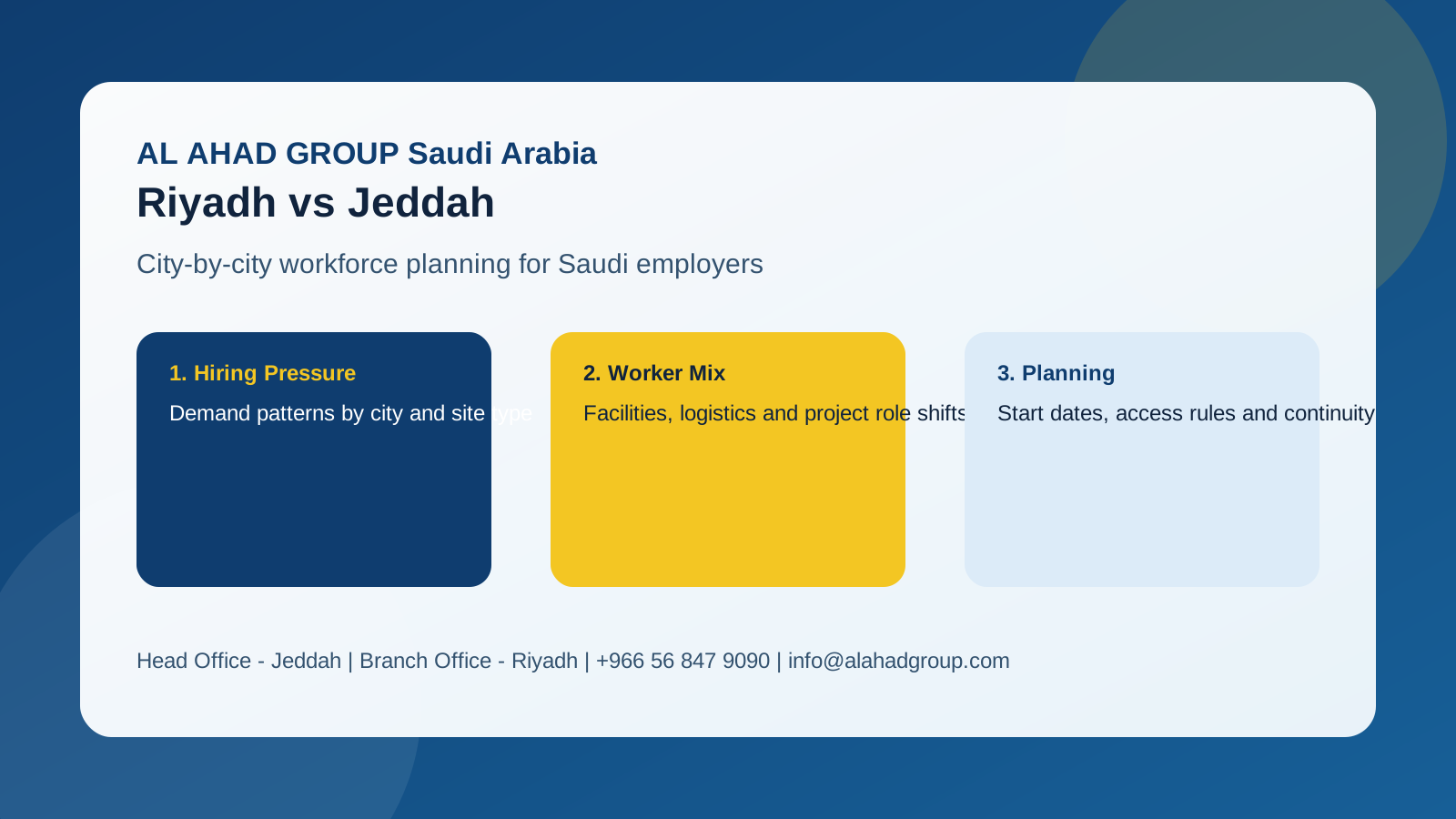
Demand pattern
Riyadh often pulls broader structural demand while Jeddah often moves faster around operations and services.
 AL AHAD GROUP
Riyadh manpower requests should identify the worker category, headcount, district or site location, shift timing, start date, contract period and replacement needs before employer review begins.
For Riyadh vs Jeddah Workforce Planning: How Hiring Needs Change by City, the employer should confirm each role, quantity, duty, shift, worksite, experience requirement and selection method before timing is discussed. This summary gives a direct view of the evidence, documents and site-readiness details needed for a practical review without assuming availability or commercial terms.
AL AHAD GROUP supports employers in Riyadh with practical workforce requirements for worker category, headcount, location, working days, start date, contract period and replacement expectations.
Riyadh often carries broader structural hiring across expansion, projects and mixed operational layers. Jeddah often pushes faster service, facilities, logistics and commercially responsive staffing patterns.
A stronger comparison service wording should help employers align the staffing page to those differences before shortlisting or quote review begins.
Riyadh often pulls broader structural demand while Jeddah often moves faster around operations and services.
The same employer may still need different role groupings across the two cities.
Riyadh urgency can sit inside growth planning, while Jeddah urgency often comes from live service pressure.
Backup and continuity logic should reflect why each cityemand changes.
Start with what kind of pressure each city creates for the business.
Decide whether supply, recruitment or outsourcing should lead in each location.
Use different role blocks if the worker behavior is not the same across both cities.
Use city-based planning to improve deployment speed and operational stability after joining.
No. The best city page depends on how the workforce demand behaves.
Because service-led hiring pressure and commercial timing often drive the city differently.
Yes, but it should still reflect the operational differences instead of flattening them.
AL AHAD GROUP
Al Faisaliyah District, Jeddah, Saudi Arabia
Call: +966 56 847 9090
WhatsApp: +966 54 277 9090
Email: info@alahadgroup.com
AL AHAD GROUP
Riyadh, Saudi Arabia
Call: +966 56 847 9090
WhatsApp: +966 54 277 9090
Email: info@alahadgroup.com
Share service scope, worker category, headcount, site location, shift timing, contract duration, start date, replacement support, site access and safety requirements.
Send the city mix, workforce categories and urgency profile so the Saudi team can review the strongest city-led hiring page.
Employer manpower support becomes clearer when worker categories, headcount, location, working days, start date and replacement expectations are reviewed together.