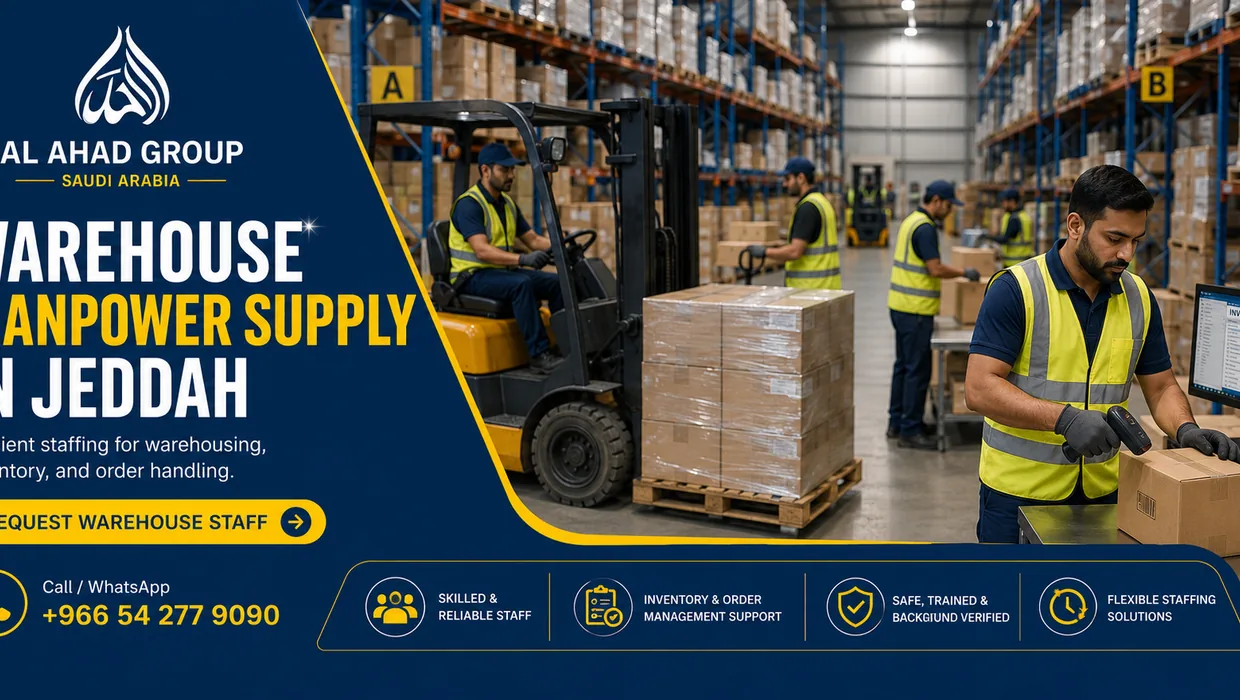
Peak season does not wait for your hiring process. A missed inbound shipment, an absentee team, or a sudden jump in orders can put warehouse operations under pressure within hours. That is where temporary staffing for warehouses becomes a practical business decision, not just a backup plan.
Why employers and job seekers trust Alahad Group
Employers trust Alahad Group for recruitment support. Job seekers rely on clear overseas placement guidance. Structured international hiring. Reliable support across global workforce routes.
Browse recent employer and job seeker feedback from recruitment, outsourcing, and overseas placement support.
For warehouse operators, logistics managers, and procurement teams, the real issue is continuity. You need people on the floor who can load, unload, sort, pick, pack, scan, and move inventory without slowing down the rest of the operation. When labor gaps hit, delays spread fast. Trucks wait longer. Orders miss cutoffs. Permanent staff get stretched. Productivity drops.
Why temporary staffing for warehouses matters
Warehouses rarely run on a flat demand curve. Volume changes by season, by contract, by promotion cycle, and by customer behavior. Some weeks require a stable crew. Other weeks require a rapid increase in headcount just to maintain service levels.
Temporary staffing for warehouses gives employers flexibility where it counts most – labor availability, speed of deployment, and reduced hiring burden. Instead of opening individual vacancies, screening candidates, managing onboarding, and trying to predict labor demand months in advance, companies can bring in job-ready support when it is actually needed.
That matters even more in fast-moving operations where labor shortages create direct operational costs. If one area falls behind, the effect reaches receiving, storage, order processing, dispatch, and customer delivery. Temporary support helps keep output steady without forcing a long-term hiring commitment for a short-term need.
The warehouse roles businesses usually need fast
Warehouse staffing is not one single role. Most employers need support across several functions, often at the same time. The most common urgent requirements include loaders and unloaders, pickers and packers, sorters, helpers, pallet movers, inventory support staff, and general warehouse labor.
In some operations, the need is simple volume support. In others, it is more about matching labor to workflow. A facility receiving containers all morning and dispatching outbound orders in the afternoon may need different crew allocation across the shift. That is why a staffing solution works best when it is built around the operation, not just the headcount number.
A warehouse with high SKU complexity may need people who can work accurately under barcode and scanning processes. A bulk storage facility may care more about physical throughput and shift endurance. A cold storage environment has different practical requirements than an e-commerce fulfillment center. Temporary labor can work well in all of these settings, but only if the supply matches the site reality.
Where temporary staffing delivers the most value
The strongest use case is speed. If your operation has urgent labor gaps, permanent hiring is often too slow. Advertising roles, screening applicants, arranging interviews, and handling documentation can take far longer than the operational window allows.
Temporary staffing is also valuable during seasonal surges, new project launches, promotional spikes, stock counts, and contract ramp-ups. It helps companies respond without overcommitting payroll after demand levels normalize.
There is also a cost-control advantage, although it depends on the situation. Temporary labor may carry a higher short-term rate than some direct hires, but it can reduce the hidden costs of rushed recruitment, overtime fatigue, missed dispatch targets, and management distraction. For many employers, that trade-off makes business sense.
What employers should expect from a warehouse staffing partner
Not every staffing supplier is equipped for warehouse operations. Fast supply alone is not enough. Employers need a partner that understands attendance pressure, shift timing, site discipline, and the operational impact of sending the wrong people.
A capable staffing provider should be able to respond quickly, supply manpower at volume, and align labor with the nature of the work. That includes understanding whether the requirement is short-term peak coverage, recurring shift support, or a longer temporary assignment tied to project demand.
Reliability matters more than promises. The real test is whether workers arrive on time, follow site instructions, and maintain productivity under working warehouse conditions. For employers, convenience is important, but consistency is what protects the operation.
Common mistakes when using temporary warehouse labor
One mistake is treating temporary staffing as a last-minute emergency only. It can solve urgent gaps, but it works better when employers plan for predictable peaks before labor pressure becomes critical. If your business sees recurring demand surges during holidays, retail cycles, or monthly dispatch periods, early manpower planning usually produces better results.
Another mistake is focusing only on numbers. Twenty workers who are poorly matched to the site may create more issues than ten workers who are suitable for the job. Warehouse environments vary. The pace, physical demands, shift structure, and supervision model all affect labor performance.
A third issue is weak onboarding at site level. Even experienced temporary workers need clear direction on workflow, safety expectations, reporting lines, and productivity standards. A short briefing can make a major difference in first-shift output.
How to make temporary staffing for warehouses more effective
Start with the work, not the title. Define what the labor team will actually do during the shift. Are they unloading containers, sorting returns, preparing pallets, replenishing pick locations, or packing outbound orders? Clear task definition improves staffing quality.
Then look at timing. Some warehouse labor issues are not about total headcount but about when people are needed. A site may need more support at receiving during one window and more support at packing later in the day. Better workforce timing can reduce unnecessary labor cost.
Communication also matters. Employers should share expected volumes, site conditions, shift durations, and any productivity targets in advance. That helps the staffing provider supply labor that is closer to the actual requirement instead of making assumptions.
Finally, track performance quickly. If output, attendance, or suitability is below expectation, address it early. Temporary staffing should give you flexibility, and that flexibility includes adjusting the workforce approach when the first setup is not ideal.
Temporary staffing for warehouses in Saudi Arabia
In Saudi Arabia, warehouse and logistics activity continues to place pressure on labor responsiveness. Distribution centers, industrial storage facilities, retail supply chains, and project-based operations all need manpower that can be deployed without delay. For businesses managing time-sensitive operations, workforce availability is closely tied to customer performance and contract delivery.
This is why many employers prefer external manpower support instead of carrying the full recruitment load internally. It reduces administrative strain and gives operations teams a faster route to labor fulfillment. In active business hubs such as Jeddah, Riyadh, and Dammam, the ability to secure dependable warehouse manpower quickly can make a direct difference to throughput and service continuity.
For companies that need a practical staffing partner, the value is straightforward. You want labor supply that is fast, reliable, and aligned with site operations. That is the standard serious employers should expect. As a Alahad Group Saudi Arabia, Alahad Group focuses on exactly that kind of workforce support for employers who cannot afford delays.
Is temporary warehouse staffing always the right answer?
Not always. If the workload is stable year-round and turnover is low, direct hiring may be the better long-term option for some roles. Temporary staffing is strongest where flexibility, speed, and variable demand are part of the business model.
In many warehouses, the best approach is mixed. Keep a core permanent team for operational stability, then use temporary labor to absorb fluctuations, cover absences, and support growth periods. That gives the business control without losing agility.
The key is not choosing temporary staffing by default. It is choosing it when the operation needs responsiveness more than fixed headcount. For warehouse businesses under pressure to move faster, that difference matters.
When labor gaps threaten output, the priority is simple: keep the floor moving with the right people, at the right time, without adding unnecessary delay to your operation.