A delayed unloading crew can throw off an entire day. One late truck turns into site congestion, idle supervisors, missed handovers, and extra cost. That is why many businesses now rely on outsourced loaders and helpers to keep daily operations moving without carrying the burden of constant hiring.
For contractors, warehouse managers, facilities teams, and business owners, this is not just a labor question. It is an operations decision. When labor demand changes by the day, keeping a fixed headcount for loading, unloading, shifting materials, and general support work is often expensive and inefficient. Outsourcing gives businesses a way to add manpower when needed, reduce internal hiring pressure, and stay focused on output.
What outsourced loaders and helpers actually solve
Loaders and helpers are often treated like basic support staff, but their impact is bigger than the job title suggests. These workers keep materials flowing, assist with movement on site, support warehouse handling, help during deliveries, and reduce the pressure on core teams. When they are missing, small slowdowns quickly become operational problems.
In construction, the issue may be delayed material movement between delivery points and work zones. In logistics, it may be slow truck turnaround or poor loading coordination. In facilities and commercial operations, it may be furniture shifting, event setup support, stock handling, or general labor during high-demand periods. The work is practical, but the business effect is direct - speed, continuity, and labor efficiency.
This is where outsourcing makes sense. Instead of searching, screening, onboarding, and managing short-notice support labor internally, companies can request manpower based on actual demand. That is especially useful when timelines are tight or labor needs are temporary but urgent.
When outsourced loaders and helpers make the most sense
The strongest case for outsourced labor is usually not permanent shortage. It is fluctuation. A business may have enough regular staff for normal activity but still face pressure during deliveries, project peaks, shutdown periods, relocations, seasonal demand, or short-term contracts.
A warehouse might need extra hands for inbound stock over three days. A contractor may need loading support for material arrival across multiple work fronts. A hospitality business may need helpers for event setup, equipment movement, or back-of-house support. Hiring full-time workers for these needs does not always make financial sense.
There is also the speed factor. Many employers are not looking for a long recruitment process. They need job-ready manpower that can be deployed quickly and supervised effectively on arrival. In those cases, outsourcing is less about reducing cost on paper and more about avoiding disruption in practice.
Still, it depends on the work pattern. If your operation needs the same team every day, in the same volume, under close in-house process control, direct hiring may be the better fit over time. But if workload changes often, outsourced manpower usually offers better flexibility.
The real business value is flexibility
The biggest advantage of outsourced loaders and helpers is not that the tasks are simple. It is that the labor can be scaled without creating long-term payroll pressure. That matters for businesses trying to balance manpower availability with budget control.
With outsourced support, companies can increase headcount for peak periods and reduce it when activity returns to normal. They avoid rushing through direct hiring for roles that may only be needed for a week, a month, or a specific project stage. They also reduce the internal time spent on sourcing, attendance coordination, and replacement management.
This kind of flexibility is especially valuable in sectors where labor demand is hard to predict. Delivery schedules change. Material arrivals shift. Projects accelerate. Clients request last-minute support. A fixed workforce does not always match a variable workload.
That said, flexibility only helps if the manpower is reliable. Sending extra workers is not enough if they arrive late, lack basic work discipline, or cannot follow instructions on site. The provider matters as much as the outsourcing model.
What to look for in a manpower partner
Not all labor supply is equal. Employers should look beyond price and ask practical questions about readiness, supervision, and replacement speed.
A reliable manpower partner should be able to provide pre-screened workers who are fit for general loading and helper duties, available on short notice, and ready to work within your operating environment. The process should be simple. You explain the requirement, the quantity, the timing, and the work location. The provider handles mobilization and fills the gap quickly.
Responsiveness is critical. If labor is required tomorrow, a slow approval chain or unclear deployment process creates more problems than it solves. Businesses need direct communication, realistic timelines, and a provider that understands urgency without making promises it cannot keep.
It also helps when the partner understands local business conditions in Saudi Arabia. Site access, shift timing, worker coordination, and compliance expectations vary by sector and location. A manpower company with local operating experience can usually respond with fewer delays and fewer mismatches.
Common use cases across Saudi businesses
Across Saudi Arabia, outsourced loaders and helpers are widely used in sectors where physical support work changes with volume. Construction remains one of the clearest examples. Material offloading, movement assistance, site clearing, and support for skilled crews all require extra manpower at different stages of a project.
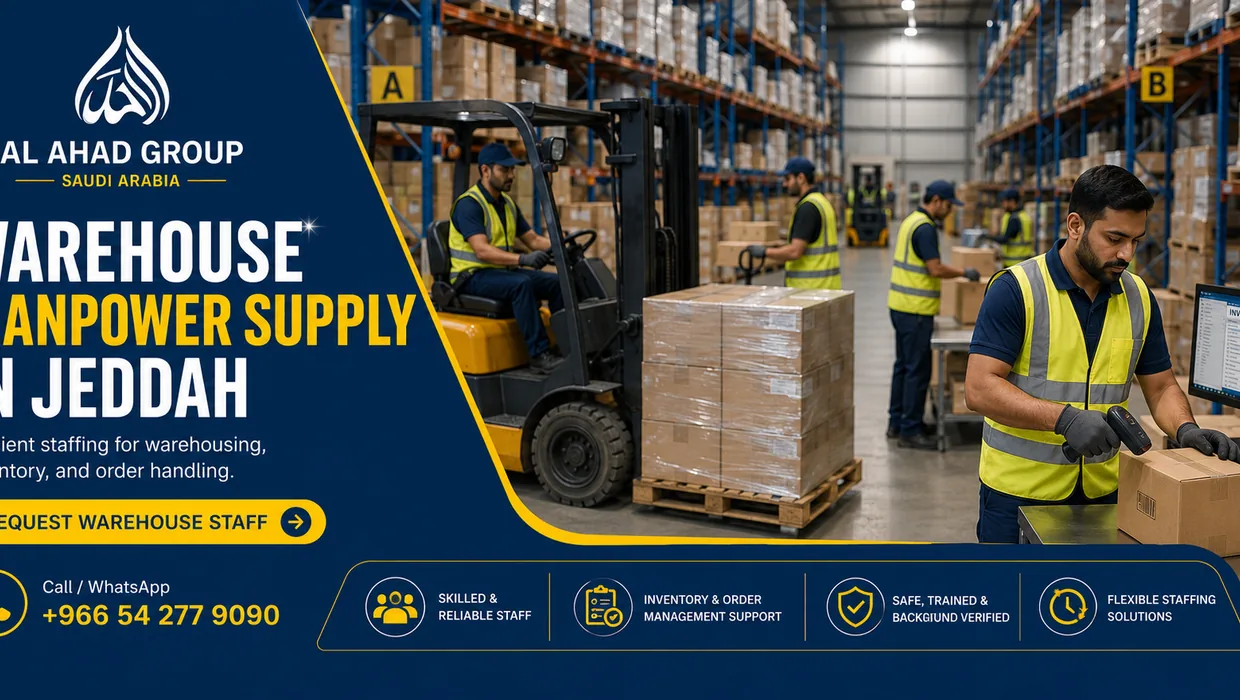
In logistics and warehousing, loading teams help improve truck turnaround, inventory movement, dispatch preparation, and inbound handling. These are time-sensitive tasks. A shortage of general support labor can slow the entire facility, even if management systems are strong.
Facilities and maintenance teams also use helper manpower during equipment moves, building support work, renovation preparation, and deep cleaning operations. In hospitality, the need often appears during events, room turnover surges, banqueting activity, and back-end support functions. Even office and corporate environments sometimes require temporary helper teams during relocations, fit-outs, or archive and stock movement.
The pattern is consistent. The work may not be highly specialized, but the timing matters. When support labor is missing, operational efficiency drops quickly.
Cost matters, but downtime costs more
Some employers hesitate to outsource because they want to control labor costs closely. That is reasonable. But the true comparison is not only between outsourced rates and direct wages. It is between controlled outsourcing and uncontrolled delay.
If trucks are waiting, supervisors are pulled into manual coordination, skilled workers are idle, or deadlines are missed because materials are not moved on time, the cost of labor shortage rises fast. Delays affect more than output. They affect client confidence, site discipline, and schedule reliability.
Outsourcing helps businesses convert labor into an on-demand operating resource. Instead of carrying excess staff year-round just to cover occasional peaks, they can bring in support labor when it adds immediate value. That approach often makes more sense for fast-moving operations.
A practical staffing decision, not just a labor choice
Outsourcing loaders and helpers should be viewed as part of workforce planning. It gives employers a simpler way to respond to volume changes, urgent requirements, and short-term pressure without overloading internal teams.
For businesses in Jeddah and other major cities across Saudi Arabia, the need is often straightforward. You need workers who can arrive on time, follow instructions, support the job, and help keep operations on track. The less time spent chasing labor, the more time management can spend on delivery, quality, and client commitments.
That is why many companies choose experienced manpower providers instead of building every support role internally. A dependable partner can reduce hiring friction, shorten response time, and keep labor available when business conditions change quickly. AL AHAD GROUP supports this model with fast, practical manpower solutions built for employers who need results without delay.
The right workforce setup is rarely about having the biggest team. It is about having the right number of people available exactly when the work demands it.