
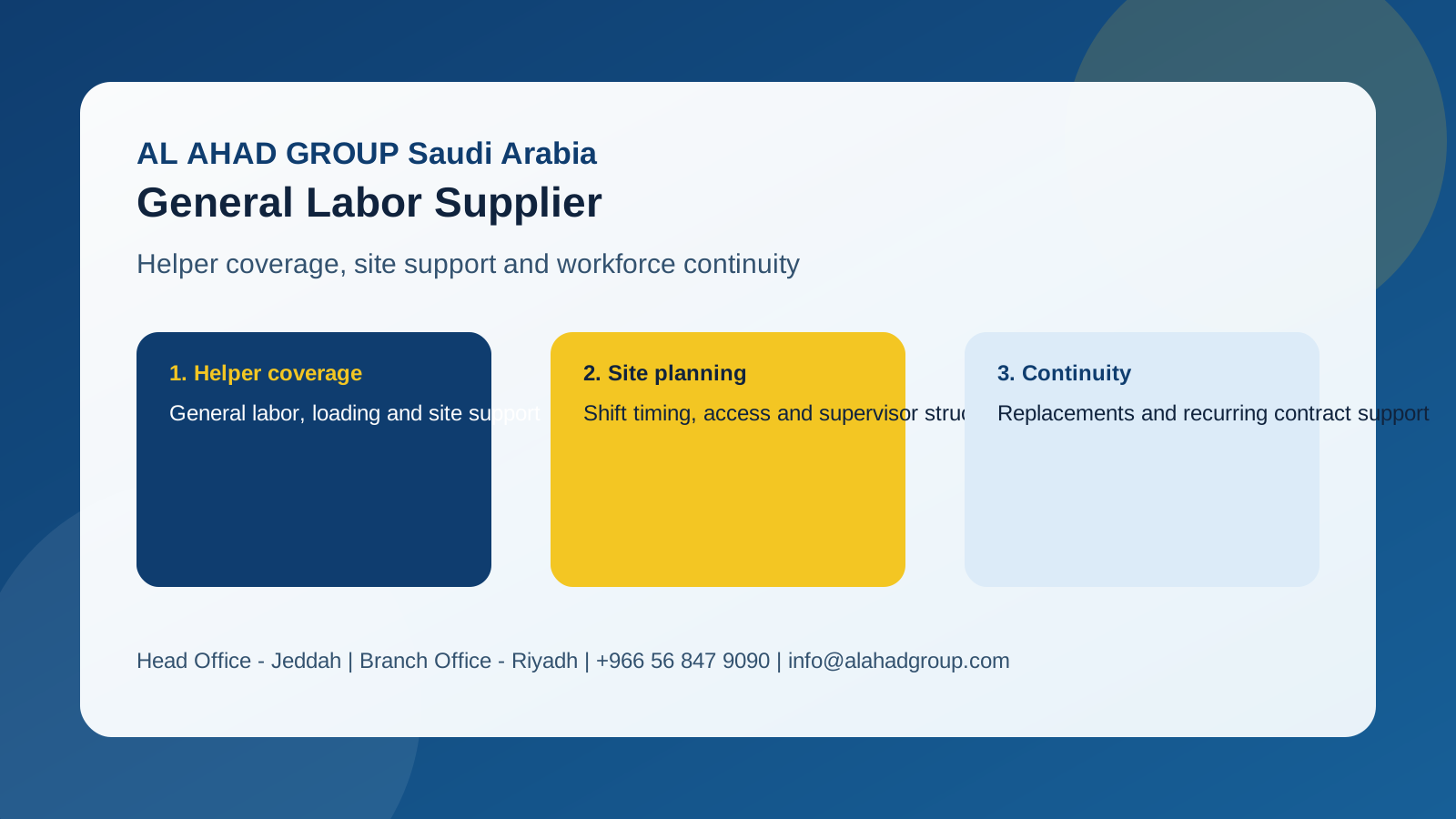
When a site is short on workers, the problem shows up fast - slower output, missed deadlines, overtime pressure, and supervisors pulled into hiring instead of operations. That is why choosing the right general labor supplier Saudi Arabia businesses rely on is not a small purchasing decision. It directly affects productivity, safety, timelines, and cost control.
For contractors, facility operators, warehouse managers, and business owners, the real question is not just who can send workers. The real question is who can send the right workers, on time, in the right numbers, with the right paperwork, and keep supply stable when demand changes. A labor supplier that cannot do that creates more work than it saves.
What businesses expect from a general labor supplier in Saudi Arabia
Most employers are not looking for theory. They need coverage. They need labor for construction support, loading and unloading, cleaning, maintenance assistance, factory support, packing, material handling, landscaping, housekeeping, and other operational roles that keep businesses moving.
A dependable general labor supplier in Saudi Arabia should reduce pressure on internal teams. That means faster deployment, clearer coordination, and less administrative drag. If your HR team is spending weeks sourcing basic operational staff, your hiring model is probably too slow for your workload.
The best suppliers understand that general labor is not "low importance" labor. These workers carry real output. If attendance is weak, if replacement time is slow, or if workers arrive without role clarity, the effect reaches the entire operation.
Why supplier quality matters more than rate alone
It is easy to compare labor suppliers by price. It is harder, and more useful, to compare them by delivery performance. A lower rate can quickly become expensive if worker quality is inconsistent, absenteeism is high, or supervision time increases because labor arrives unprepared.
This is where many employers get stuck. On paper, two suppliers may look similar. In practice, one responds within hours, keeps documentation in order, and maintains workforce continuity. The other takes too long, sends mismatched profiles, and struggles when demand spikes.
Cheap labor supply is not always low cost. If one weak supplier causes rework, idle equipment, delayed handover, or project slippage, the difference is felt across the budget. For many employers, reliability has more value than a small rate gap.
How to evaluate a general labor supplier Saudi Arabia companies can depend on
The first thing to check is response speed. If your requirement is urgent, you need to know how quickly workers can be mobilized and what the supplier needs from your side to start. A strong manpower partner will give direct answers, not vague assurances.
The second point is role fit. General labor sounds broad, but labor needs vary by site and sector. A warehouse may need physically fit workers for loading and sorting. A facilities company may need cleaners and helpers who can work within shift systems. A construction project may need support labor familiar with site discipline and basic safety expectations. Good suppliers ask operational questions before sending workers.
The third point is scale. Some suppliers can handle small requests but struggle when a client suddenly needs 30, 50, or 100 workers. Others are built for volume and can support ongoing deployment across multiple sites. What works for a small commercial operation may not work for a contractor managing deadlines across several locations.
Compliance also matters. Businesses want labor support without added legal or administrative risk. That means documentation, worker status, and deployment processes should be handled properly. A supplier that is disorganized on compliance usually creates avoidable issues later.
Where general labor supply adds the most value
General labor supply is especially useful where demand changes quickly or where workforce planning is difficult to predict month by month. Construction is the obvious example, but it is not the only one. Warehousing, logistics, hospitality support, industrial operations, maintenance, and seasonal business activity all benefit from flexible labor access.
This model also makes sense when core management wants to stay focused on output rather than recruitment. Instead of running repeated sourcing cycles for operational roles, employers can work with a supplier that already has access to available manpower.
There is also a practical advantage for businesses opening new sites, expanding shifts, or handling temporary workload peaks. In those cases, speed matters more than building a long internal pipeline. A labor supplier helps close the gap between approved demand and actual deployment.
What can go wrong when the supplier is weak
The most common problem is inconsistency. Workers show up late, numbers fall short, or performance drops after the first week. Some suppliers are strong at sales and weak in follow-through. That gap creates stress for supervisors and often forces the client to restart sourcing under pressure.
Another issue is poor communication. If your team has to chase updates, repeat requirements, and escalate basic attendance issues, the service is not saving time. It is consuming it. A labor partner should simplify workforce management, not add another layer of operational friction.
There is also the problem of overpromising. Some suppliers accept manpower requests they cannot realistically fulfill. That may win them the order, but it puts the client at risk. In labor supply, honest capacity is better than aggressive promises.
Choosing a supplier by business need, not just brand claims
Every manpower company says it is reliable. Employers should look at how the supplier handles real operating conditions. Can they support urgent requests? Can they maintain worker flow over time? Can they adapt when your requirement changes mid-project? Can they communicate with one accountable point of contact?
It also helps to judge the supplier by the type of business you run. If your operation depends on attendance and shift continuity, replacement speed matters. If your project is deadline-driven, workforce scaling matters. If your environment is sensitive or customer-facing, discipline and presentation matter more.
In cities with heavy project activity such as Jeddah, Riyadh, Dammam, and nearby commercial and industrial zones, manpower demand can move quickly. That means suppliers need strong local coordination, not just a large claim on paper. Availability without execution is not enough.
What strong manpower support should feel like
Good labor supply feels controlled. Requests are understood quickly. Worker numbers are clear. Timing is realistic. Documentation does not become a separate problem. Site teams know who is coming and when. If changes are needed, the supplier responds without delay.
That may sound basic, but for many employers it is the difference between smooth operations and constant disruption. The value of a manpower supplier is not in marketing language. It is in fewer staffing gaps, fewer management headaches, and better continuity on the ground.
This is also why businesses often stay with one supplier once they find a dependable partner. Switching providers repeatedly may appear flexible, but it often creates more inconsistency. A supplier that understands your operation becomes more useful over time because requirements are clearer and response becomes faster.
Why many employers look for a specialist, not a general vendor
A company focused on manpower supply usually understands urgency better than a broad service vendor with staffing as a side offering. Specialized suppliers build around labor availability, deployment management, and client workforce needs. That focus matters when deadlines are active and labor gaps cannot wait.
For employers that want straightforward manpower support, the decision usually comes down to confidence. Can this supplier deliver what they say, without delay and without confusion? That is why businesses searching for the Best Manpower Supply Company in Jeddah Saudi Arabia often prioritize speed, consistency, and practical support over polished presentations.
A provider such as AL AHAD GROUP positions itself around exactly that business need: helping employers secure manpower fast and keep operations moving with less hiring burden. For employers, the message is simple. The right labor supplier should make your workforce problem smaller from day one.
The right question to ask before you appoint a supplier
Do not ask only, "How many workers can you provide?" Ask, "How reliably can you support our operation when pressure increases?" That question reveals more about service quality, accountability, and long-term value.
A strong general labor supplier Saudi Arabia employers trust should help your business stay productive, flexible, and ready for demand changes without turning staffing into a daily obstacle. If a supplier can do that consistently, they are not just filling positions. They are protecting your operation when it matters most.