Recruitment, manpower supply, payroll outsourcing, and workforce support for Saudi Arabia.
Home / Updates / Temporary Staffing vs Permanent Recruitment

Temporary Staffing vs Permanent Recruitment

Compare temporary staffing vs permanent recruitment to choose the right hiring model for speed, cost, flexibility, and long-term business needs.

A project start date rarely moves just because your hiring pipeline is slow. When output targets, site schedules, service levels, or seasonal demand are on the line, the real question is not just who to hire. It is whether temporary staffing vs permanent recruitment is the better business decision for the role, the timeline, and the risk involved.

Trusted employer and candidate feedback

Why employers and job seekers trust Alahad Group

Employers trust Alahad Group for recruitment support. Job seekers rely on clear overseas placement guidance. Structured international hiring. Reliable support across global workforce routes.

5.0
Overall client ratingBased on 15 reviews
5
15
4
0
3
0
2
0
1
0
Employer and candidate reviewsGlobal hiring feedback15 reviews

For employers in Saudi Arabia, this choice affects more than headcount. It impacts labor continuity, admin workload, cost control, and how quickly operations can respond when demand changes. Some roles need long-term ownership and stability. Others need speed, flexibility, and immediate workforce support. The smartest hiring decisions usually come from knowing the difference early, before delays start costing money.

Temporary staffing vs permanent recruitment: what changes for employers?

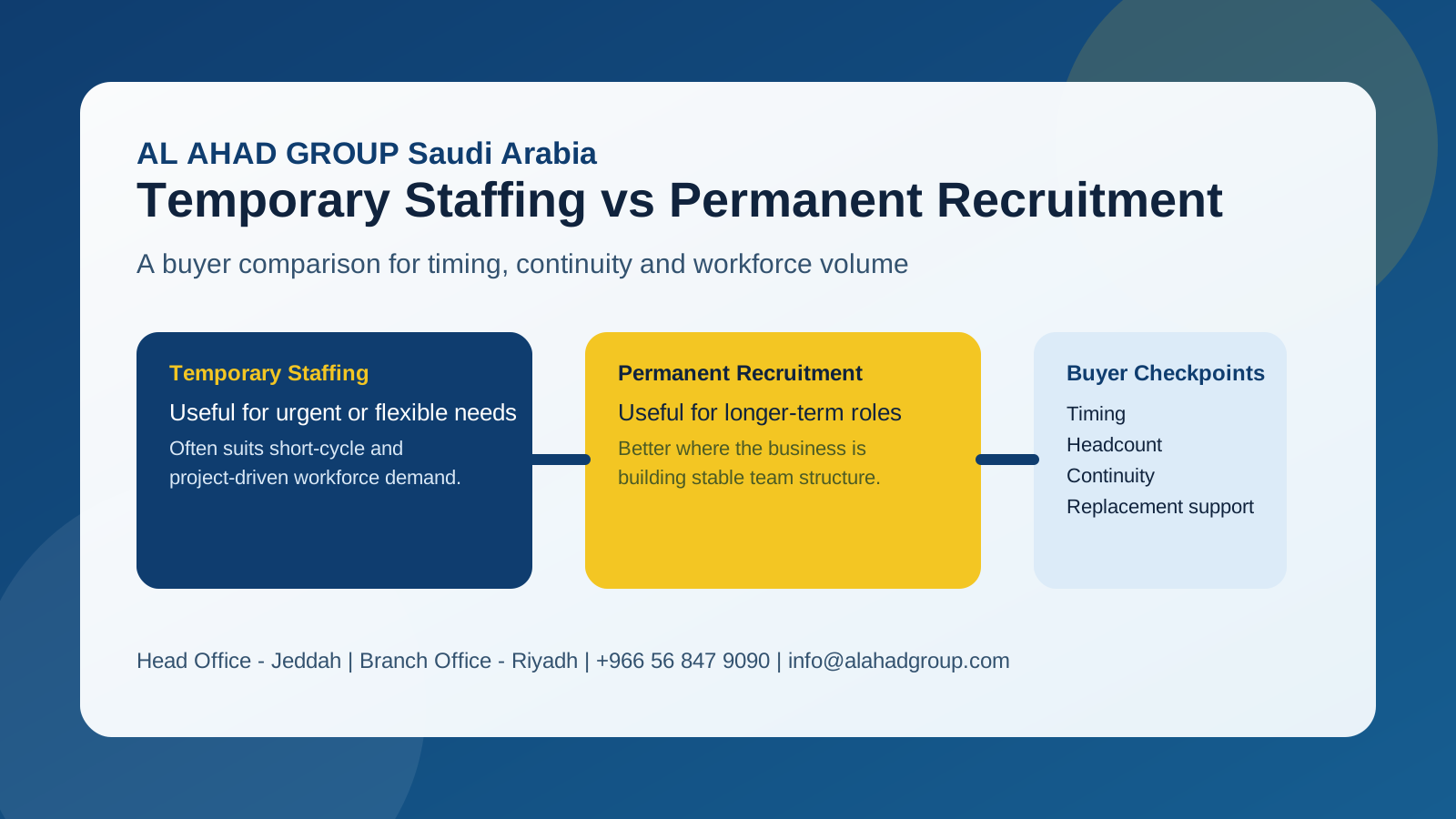
Temporary staffing means bringing in workers for a defined period or operational need. This model is often used when demand spikes, projects expand, shifts need coverage, or labor gaps appear without much notice. In many cases, the staffing provider handles sourcing, screening, deployment, and workforce coordination, which reduces pressure on the employer.

Permanent recruitment is different. It focuses on hiring employees into long-term positions within the business. This route makes more sense when the role is ongoing, central to company performance, or tied to leadership, technical knowledge, or internal culture.

The difference is not just duration. It is also about speed, commitment, overhead, and business exposure. Temporary staffing gives employers room to scale. Permanent recruitment gives employers long-term retention and role continuity. Both are useful. The better option depends on what the business needs right now and what it expects six months from now.

When temporary staffing is the stronger option

Temporary staffing works best when the business problem is immediate. If a contractor needs more laborers next week, a warehouse is entering peak volume, or a facilities team is short on maintenance support, waiting through a full permanent hiring process can create delays that hit operations fast.

This model is especially valuable in sectors where workloads move up and down. Construction, logistics, hospitality, industrial operations, and maintenance often need manpower that can scale with projects, contracts, shutdowns, events, or seasonal demand. In those cases, flexibility is not a nice extra. It is part of keeping the business running.

There is also a cost control angle. A permanent hire brings long-term salary commitments, onboarding time, and internal HR effort. Temporary staffing can reduce some of that burden when the need is short-term or uncertain. If the business only needs additional workers for a defined window, locking into permanent recruitment may create unnecessary fixed costs.

Another practical benefit is speed. A staffing partner with ready manpower can often respond faster than an internal talent search. For employers managing urgent timelines, that response time matters more than a polished recruitment process.

When permanent recruitment makes more sense

Permanent recruitment is usually the better route when the role is tied to long-term growth, internal accountability, or specialized business knowledge. If the position affects strategic planning, team leadership, client relationships, compliance responsibility, or technical continuity, hiring permanently is often the stronger investment.

A permanent employee can build deeper process knowledge over time. They are more likely to own outcomes beyond a short assignment and become part of the company’s internal structure. That matters in departments where consistency, trust, and business familiarity are hard to replace.

This model can also make financial sense when the role is constant and essential. If the company will need that capability every month for the foreseeable future, recurring temporary staffing may eventually cost more than building a permanent team member into the business.

Still, permanent recruitment comes with trade-offs. It usually takes longer. It can require more internal screening, approvals, and onboarding. And if the hire is wrong, replacing them costs time and money.

Cost is not just salary

Many employers compare temporary staffing and permanent recruitment by looking at headline cost only. That is a mistake. The real cost includes recruitment time, workforce administration, vacancy periods, turnover risk, training, and the operational damage caused by being understaffed.

Temporary staffing may appear more expensive on a day-rate basis, but it can protect revenue and project deadlines when labor is needed immediately. A vacant role on a live site or in a busy operation often costs more than the staffing solution itself.

Permanent recruitment may look more efficient over the long term, but only if the role remains stable and the hire performs well. If hiring takes too long, or if turnover is high, the business may end up paying more through repeated recruitment cycles and lost productivity.

That is why temporary staffing vs permanent recruitment should be measured against business impact, not just payroll lines.

Flexibility versus control

One of the clearest differences between the two models is flexibility. Temporary staffing gives employers the ability to increase or reduce labor based on real conditions. That is useful when contracts shift, demand changes, or project phases require different workforce levels.

Permanent recruitment gives more direct control over employee development, culture fit, and long-term role design. That can be essential for core teams and leadership functions.

Neither model is automatically better. If the business environment is changing quickly, flexibility usually wins. If the business is building a stable internal function, control becomes more important.

Compliance and administrative workload

Hiring decisions are not only operational. They are administrative. Employers also need to think about documentation, onboarding, workforce coordination, and day-to-day employment processes.

With temporary staffing, much of that burden can sit with the staffing provider, depending on the arrangement. This is a major advantage for businesses that want labor support without building a larger internal HR function. It allows managers to focus on output instead of spending time on every stage of workforce administration.

Permanent recruitment typically places more internal responsibility on the employer. That may be fine for companies with strong HR systems, but it can slow things down for teams that are already stretched.

For businesses that need speed and reduced friction, this point often decides the issue.

A hybrid approach is often the smartest move

Many employers do not need to choose one model for every role. The strongest workforce strategy is often mixed. Temporary staffing can support frontline operations, project expansion, and urgent gaps, while permanent recruitment can be reserved for positions that need long-term ownership.

For example, a company may hire permanent supervisors, engineers, or department leads while using temporary manpower for operational support, peak demand, or project-based labor. This gives the business a stable core team without losing the ability to scale.

That balance is especially useful in markets where labor demand can change fast. It protects continuity while keeping workforce planning practical.

How to decide faster and with less risk

If the role must be filled urgently, the workload is temporary, or business volume is uncertain, temporary staffing is usually the safer decision. If the role is ongoing, strategic, and central to internal performance, permanent recruitment is usually worth the longer process.

Ask simple business questions. Is this need short-term or long-term? Is speed more important than long-term retention? Will the workload stay consistent? Does the role require internal ownership? How much admin time can the business realistically absorb?

The right answer becomes clearer when the decision is tied to operational reality instead of hiring preference.

For employers that need labor support without delays, working with an experienced manpower partner can remove a large part of the risk. A provider like Alahad Group helps businesses move faster where timing, workforce availability, and continuity matter most.

The best hiring model is the one that keeps your business moving without creating unnecessary cost, delay, or management burden. If demand is immediate, temporary staffing can give you the manpower to stay on schedule. If the role is built for long-term value, permanent recruitment has its place. Good workforce planning is not about choosing what sounds better. It is about choosing what works under pressure.

WhatsApp +966 56 847 9090
WhatsApp +966 56 847 9090WhatsApp +966 54 277 9090