Guard posts
Site entrances, patrol pages and controlled access points.
 AL AHAD GROUP
Riyadh manpower requests should identify the worker category, headcount, district or site location, shift timing, start date, contract period and replacement needs before employer review begins.
Employers reviewing Riyadh Security Staffing for Saudi Employers can use this page to clarify worker categories, quantities, duties, selection criteria, schedules, site access and mobilisation dependencies. The guidance keeps the request specific, identifies the documents and operating details that matter, and prepares the approved brief for the existing employer enquiry route.
AL AHAD GROUP supports employers in Riyadh with practical workforce requirements for worker category, headcount, location, working days, start date, contract period and replacement expectations.
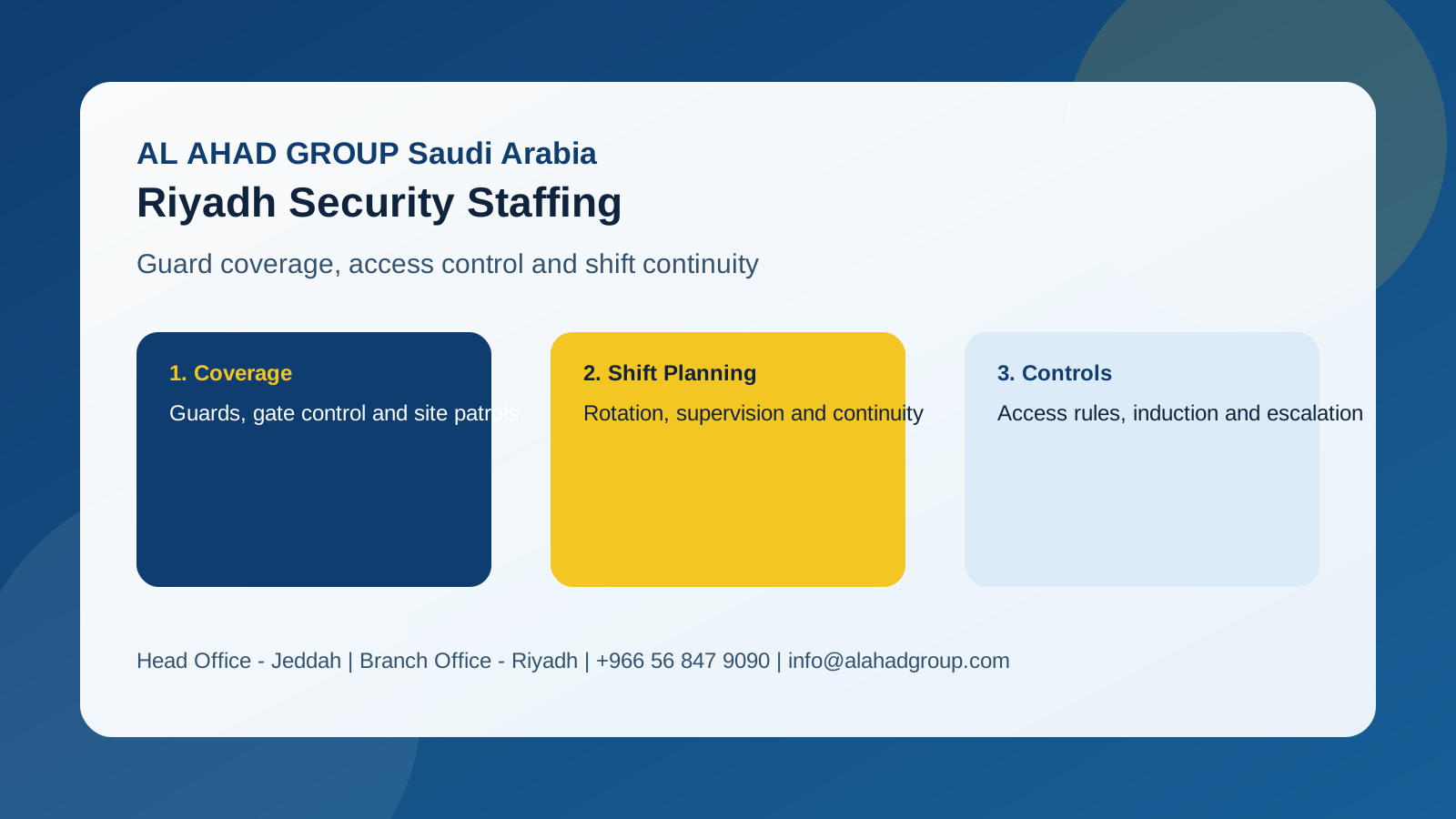
Guard demand often looks like a simple headcount question until one uncovered post affects access control, patrol routines or customer-facing property operations.
A stronger employer guide helps operations teams define the actual coverage model rather than preserving worker-led wording that does not improve the requirement review.
Site entrances, patrol pages and controlled access points.
Day, night and rotation patterns for active properties.
Backup coverage where one missed shift affects security visibly.
Coordination across towers, offices or mixed-use locations.
Show how many positions the site actually needs.
Coverage depends on the rotation structure.
Some sites carry more continuity risk than others.
Security support weakens quickly when backup is vague.
AL AHAD GROUP
Al Faisaliyah District, Jeddah, Saudi Arabia
Call: +966 56 847 9090
WhatsApp: +966 54 277 9090
Email: info@alahadgroup.com
AL AHAD GROUP
Riyadh, Saudi Arabia
Call: +966 56 847 9090
WhatsApp: +966 54 277 9090
Email: info@alahadgroup.com
Share service scope, worker category, headcount, site location, shift timing, contract duration, start date, replacement support, site access and safety requirements.
Send the post count, property type and shift model so the Saudi team can review the security staffing page clearly.
Employer manpower support becomes clearer when worker categories, headcount, location, working days, start date and replacement expectations are reviewed together.
A workable plan for Riyadh Security Staffing for Saudi Employers starts with the operating requirement, not a generic request for workers. Record number of posts, operating hours, access rules, reporting duties and relief coverage, and identify which details are fixed versus still awaiting site confirmation. This gives reviewers enough context to distinguish a recurring requirement from a short peak or project phase.
Break the requirement into activities such as post instructions, patrol areas, access points, visitor handling, incident reporting and shift relief. State the expected output or inspection point for each activity, then show the number of workers and supervisors needed by shift. Include the reporting point, working days, break arrangements and any periods when the team cannot enter the work area. If several buildings or locations are involved, use a separate line for each site so travel, relief coverage and management responsibility are visible before a proposal is prepared.
Before confirming a start date, review site induction, communication equipment, escalation contacts, logbooks and supervisor review. Clarify which items the employer supplies and which items belong in the service scope. Name the people authorized to approve workers, receive the team, record attendance and raise a service issue. The joining sequence should allow time for document review, induction and access approval; availability and timing should be reconfirmed against the final written brief.
For site-security operations, the first operating week should have simple controls for attendance, output, safety observations and open actions. Agree how absences or unsuitable placements are reported, what information is needed for a replacement review and who accepts the change. Where demand varies, record the base roster separately from optional or peak coverage so later adjustments do not change the agreed core scope.
 Open channel