Recruitment, manpower supply, payroll outsourcing, and workforce support for Saudi Arabia.
Home / Updates / What Is Manpower Outsourcing?

What Is Manpower Outsourcing?

What is manpower outsourcing? Learn how it works, when to use it, and why businesses choose it to fill labor gaps faster and cut hiring delays.

A project slows down fast when labor is short, deadlines are fixed, and your internal hiring team cannot fill roles quickly enough. That is usually when the question comes up: what is manpower outsourcing, and is it the right move for your business?

Trusted employer and candidate feedback

Why employers and job seekers trust Alahad Group

Employers trust Alahad Group for recruitment support. Job seekers rely on clear overseas placement guidance. Structured international hiring. Reliable support across global workforce routes.

5.0
Overall client ratingBased on 15 reviews
5
15
4
0
3
0
2
0
1
0
Employer and candidate reviewsGlobal hiring feedback15 reviews

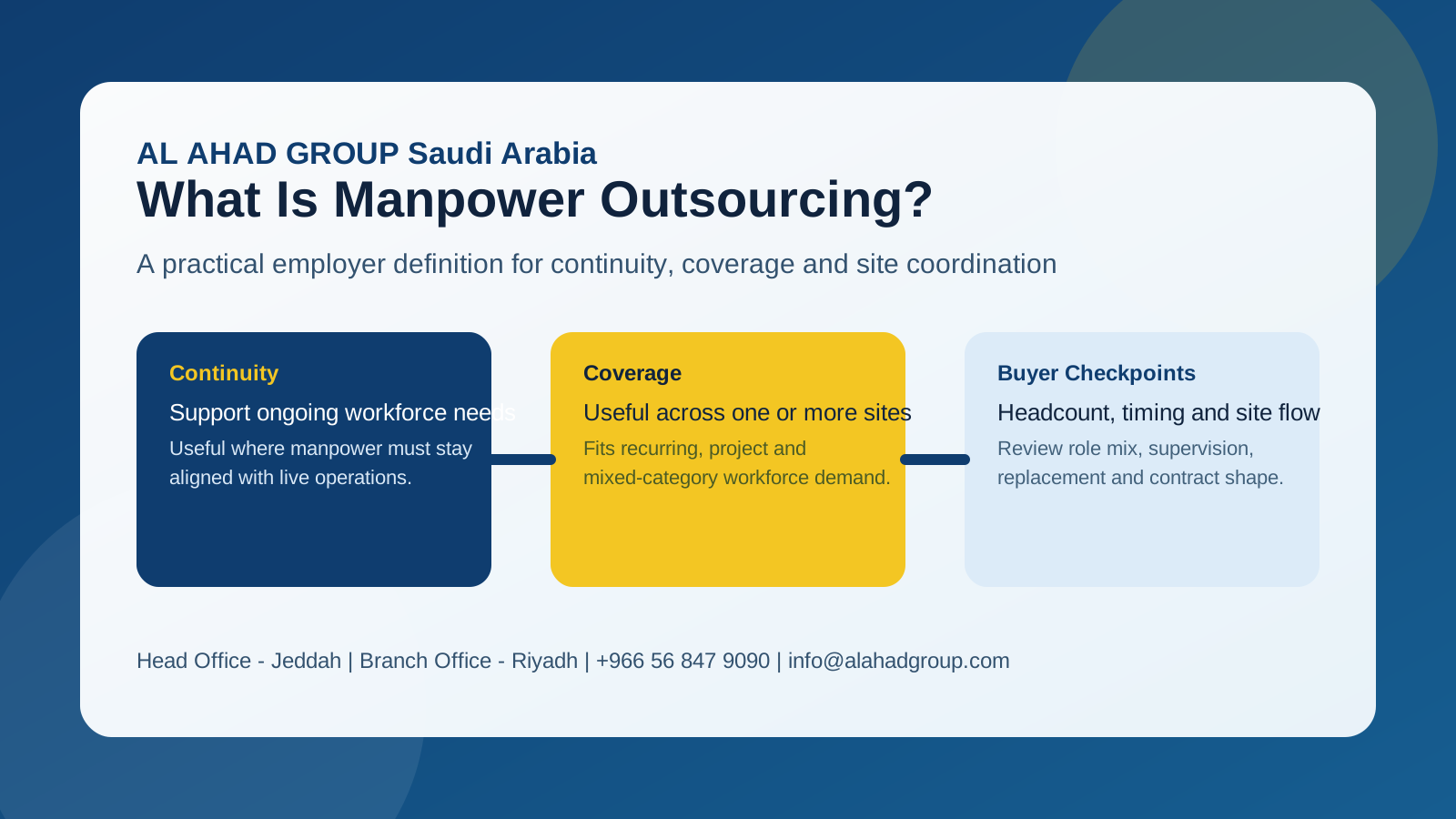
Manpower outsourcing is when a company uses an external manpower supplier or staffing partner to provide workers for specific roles, departments, projects, or ongoing operations. Instead of sourcing, screening, onboarding, and managing every step of recruitment alone, the employer works with a third-party provider that supplies job-ready personnel based on operational need. For many businesses, it is a practical way to solve workforce gaps without building a full hiring pipeline from scratch.

What is manpower outsourcing in simple terms?

In simple terms, manpower outsourcing means getting workers through a specialist provider rather than hiring every worker directly yourself. The provider sources the labor, handles much of the administration, and deploys people where needed. The client company focuses on output, timelines, and site performance.

This model is widely used in construction, logistics, maintenance, facilities management, hospitality, manufacturing, and support services. It works especially well when labor demand changes quickly or when projects need fast mobilization. If your business wins a new contract, expands to another site, or faces seasonal pressure, outsourced manpower can close the gap faster than traditional hiring.

That does not mean it replaces direct hiring in every case. If you are filling highly strategic leadership roles or long-term positions that shape company culture, direct recruitment may make more sense. Manpower outsourcing is strongest where speed, scale, and workforce continuity matter most.

How manpower outsourcing works

The process is straightforward when the provider is experienced. First, the client defines the requirement. That usually includes job category, number of workers, project duration, shift pattern, skill level, and site location. A good manpower supplier then matches available candidates or begins targeted sourcing based on those needs.

Once workers are selected, the provider typically manages documentation, mobilization, placement, and related workforce coordination. Depending on the agreement, the outsourcing company may also handle payroll administration, attendance tracking, replacements, and other employment support functions. This reduces pressure on the client’s HR and operations teams.

For employers, the main advantage is not just access to labor. It is the ability to get labor organized and deployed with less delay. That matters in sectors where downtime is expensive and project schedules are not flexible.

Why businesses use manpower outsourcing

Most companies do not outsource manpower because it sounds modern. They do it because hiring internally can be slow, expensive, and unpredictable when labor demand spikes.

A contractor may need 50 workers for a new site within days. A facilities company may need replacement staff across multiple shifts. A warehouse may need extra hands before a peak delivery period. In these situations, outsourced manpower helps maintain continuity without forcing the business to build a large permanent workforce.

There is also an administrative reason. Recruitment, onboarding, documentation, attendance coordination, and worker replacement all take time. When those tasks are handled by a manpower partner, internal teams can focus more on operations and less on labor processing.

Cost is another factor, but it should be viewed carefully. Manpower outsourcing can lower recruitment overhead and reduce the risk of understaffing. At the same time, it is not always the cheapest option on paper for every role. Its real value often comes from speed, reduced vacancy time, and fewer disruptions to business output.

The difference between manpower outsourcing and direct hiring

Direct hiring means the company recruits workers as its own employees and handles the full employment process internally. That gives the employer more direct control over long-term workforce development, internal culture, and retention planning.

Manpower outsourcing is different because the workforce is supplied through a third-party provider. The employer still controls the work environment, performance expectations, and operational standards, but the sourcing and much of the employment administration sit with the manpower company.

This distinction matters because the right model depends on the role. For core management positions, direct hiring may be the better fit. For operational labor, urgent staffing needs, temporary expansion, and project-based deployment, outsourcing often delivers faster results.

When manpower outsourcing makes the most sense

Manpower outsourcing works best when labor demand is immediate, variable, or large in scale. If your business operates on project cycles, service contracts, or seasonal demand, outsourced staffing gives you more flexibility than relying only on permanent hiring.

It is also useful when local recruitment channels are too slow for your timeline. Many employers know exactly what kind of worker they need, but they do not have time to advertise roles, review applications, and manage onboarding at speed. In those cases, a manpower supplier becomes an operational support partner, not just a recruiter.

In Saudi Arabia, this can be especially relevant for sectors with active site work, multiple locations, and labor-heavy operations. Companies in cities such as Jeddah, Riyadh, Dammam, and Makkah often need workforce support that can scale with project pressure, client commitments, and service delivery targets.

What to look for in a manpower outsourcing partner

Not all manpower suppliers offer the same level of service. The difference is often seen in responsiveness, workforce quality, documentation handling, and replacement speed.

A reliable provider should understand your industry, not just your headcount request. If you need industrial labor, logistics staff, maintenance teams, or hospitality support, the supplier should know the pace, expectations, and working conditions involved. Sending available workers is not enough. The right workers need to match the job requirement.

You should also look at communication. Delays often come from poor coordination, unclear reporting lines, or weak follow-up after deployment. A strong manpower partner stays engaged after placement and responds quickly when attendance, performance, or replacement issues come up.

Compliance and documentation matter as well. Employers want speed, but they also need confidence that workforce supply is being managed properly. A serious provider understands that manpower delivery is not only about numbers. It is about reliability, continuity, and business protection.

Benefits and trade-offs to consider

The biggest benefit of manpower outsourcing is speed. It can reduce the time between identifying a labor need and filling it. That helps businesses keep projects moving and avoid the cost of delays.

Another benefit is flexibility. You can scale labor up or down based on contracts, workloads, and site demands. That is useful when demand is not consistent enough to justify expanding your permanent headcount.

There is also less internal administrative burden. Your team spends less time managing hiring logistics and more time running operations.

Still, there are trade-offs. Outsourced workers may not integrate into company culture the same way long-term employees do. Some roles require close supervision and structured performance management. If expectations are unclear, productivity can suffer even when headcount is filled. That is why manpower outsourcing works best when the scope, reporting, and operational standards are clearly defined from the start.

The quality of the provider also changes the outcome. A weak supplier creates more problems than it solves. A strong one becomes a practical extension of your workforce strategy.

What is manpower outsourcing really buying you?

For most employers, manpower outsourcing is not just about labor. It is about time, continuity, and reduced hiring friction.

You are buying faster access to workers. You are buying relief from repeated recruitment cycles. You are buying the ability to keep sites active, shifts covered, and service levels stable when labor demand moves faster than internal hiring can handle.

That is why many employers do not ask whether outsourcing is theoretically useful. They ask whether the provider can deliver the right people, on time, with consistent support.

For businesses that need dependable workforce support, that is the real decision point. A manpower supplier should make operations easier, not more complicated. That is the standard serious employers should expect.

If your business depends on labor availability to hit deadlines and maintain service, manpower outsourcing is worth evaluating with a practical mindset. The best choice is not the model that sounds good in a meeting. It is the one that keeps your workforce ready when the work cannot wait. Companies such as Alahad Group position themselves around exactly that requirement through direct manpower supply support for employers who need speed and reliability.

WhatsApp +966 56 847 9090
WhatsApp +966 56 847 9090WhatsApp +966 54 277 9090