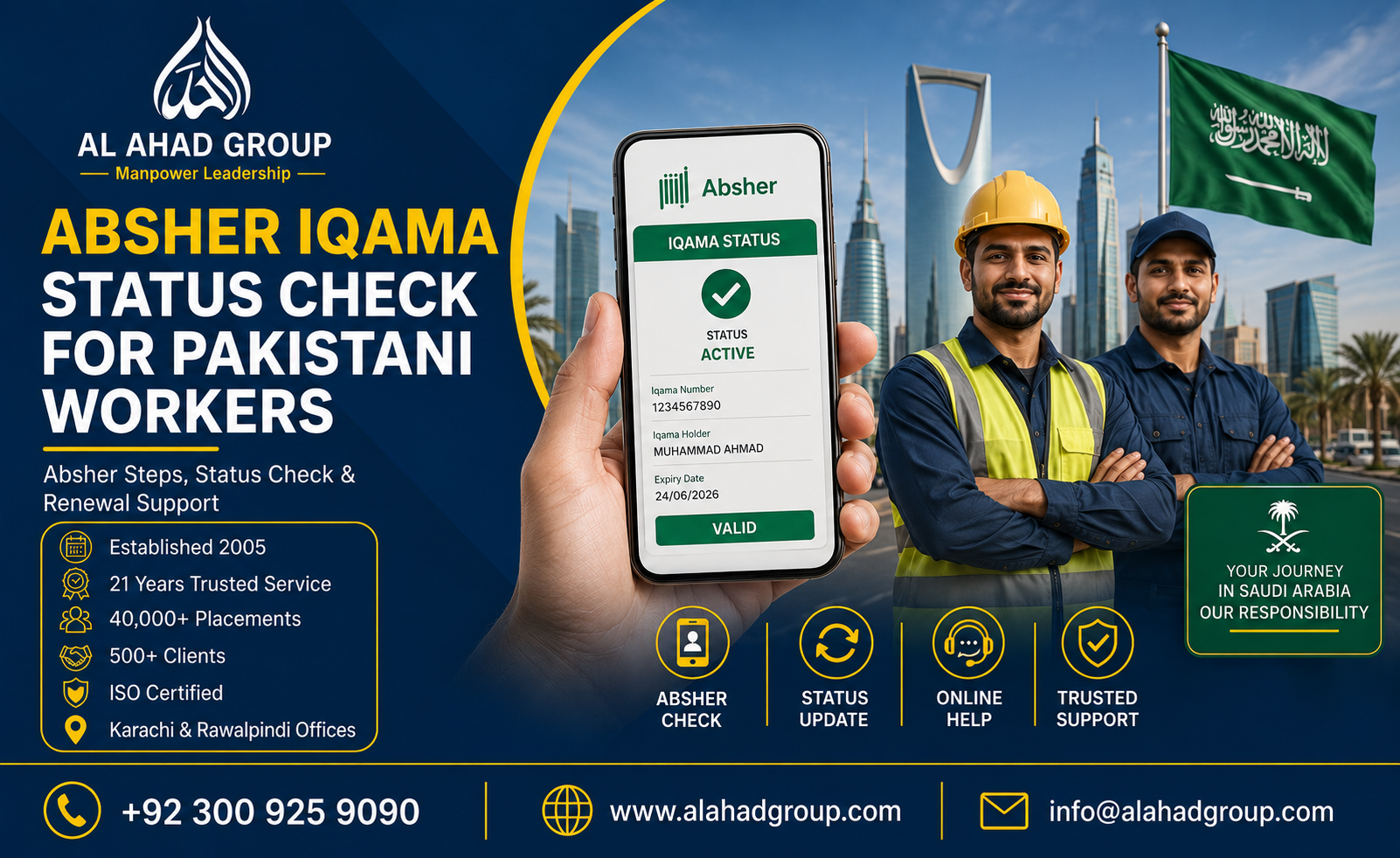
A delayed or expired Iqama can stop work, block travel, and create avoidable compliance issues for both employees and employers. That is why knowing How to Check Iqama Status for Expats in Saudi Arabia MOI Guide matters in day-to-day operations, especially for companies managing foreign workers across multiple sites.
For employers, this is not just an employee admin task. Iqama status affects workforce continuity, site access, renewals, and legal compliance. If you run construction teams, facility staff, drivers, cleaners, or hospitality workers, one missed renewal can quickly turn into a staffing problem. The process itself is simple, but the impact of ignoring it is not.
Why Iqama status checks matter
An Iqama is the official residency permit for expatriates in Saudi Arabia. It confirms that the worker is legally registered and authorized to live and work in the Kingdom. When the status is active and valid, operations move normally. When it expires or shows a problem, the employer may face penalties, disruption, or delays in worker deployment.
For businesses, regular checks help prevent last-minute surprises. A worker may be present on site and still have a residency issue that affects payroll processing, mobility, or contract continuity. That is why responsible workforce management includes routine Iqama verification, not only at hiring stage but throughout the employment cycle.
How to check Iqama status in Saudi Arabia MOI systems
The most common way to verify status is through the Ministry of Interior related digital services. In practice, many users now access these checks through official government platforms connected to MOI services, including Absher and other approved channels. The exact interface can change over time, but the basic process remains similar.
Start by gathering the correct worker details. In most cases, you will need the Iqama number. Sometimes the system may also request a visual verification code or date of birth, depending on the portal and the service being used.
Then go to the official platform that hosts residency inquiry services. Look for the section related to Iqama validity, residency status, or expat inquiries. Enter the worker's Iqama number carefully. A single digit error will return the wrong result or no result at all.
Once the details are entered, the system usually shows the validity information. This may include whether the Iqama is active, expired, or close to expiry, along with the expiration date. Some platforms may display related information about residency record status rather than a long explanation. That is normal. The key point is whether the worker's residency remains valid for legal employment.
Step-by-step process for employers and expats
If you are checking one employee, the process takes only a few minutes. If you are managing a larger labor force, the same process should be built into weekly or monthly compliance reviews.
First, confirm the employee's correct Iqama number from HR records or from the physical or digital Iqama copy. Second, access the approved government inquiry page. Third, enter the required details exactly as shown on official records. Fourth, review the returned status and record the expiry date in your HR tracking system.
That last part is where many companies fall short. Checking status once is useful, but recording renewal dates is what prevents manpower disruption. In high-volume staffing environments, a basic manual spreadsheet may work for a small team, but larger employers usually need structured tracking with alerts and ownership assigned to a responsible admin or HR coordinator.
What the Iqama status result usually means
The result is often straightforward, but it still needs proper interpretation.
If the Iqama is valid, the worker's residency is active through the displayed expiry date. That means the worker is generally compliant from a residency standpoint, assuming there are no separate work permit or sponsorship issues.
If the Iqama is expired, action is needed immediately. The employee may be exposed to legal and practical restrictions, and the employer may face fines or operational delays. In some cases, the issue is simply that renewal is pending in the system. In other cases, there may be a broader administrative hold that needs follow-up.
If the system does not return a clear result, do not guess. Recheck the number, verify the source platform, and escalate internally if needed. Data entry mistakes are common. So are delays caused by recent updates not yet reflected across all systems.
Common reasons an Iqama check shows a problem
Most status issues come from a small set of causes. The first is simple expiry because renewal was not completed on time. The second is a delay in processing after payment or submission. The third is incorrect employee data in internal records. The fourth is a sponsor-related or administrative issue that requires direct action rather than a basic online check.
For employers handling a large expatriate workforce, the bigger issue is usually not the government system itself. It is weak internal follow-up. When onboarding moves fast and projects are urgent, compliance tracking can fall behind. That is why labor-heavy businesses need a clear process, especially when workers are deployed across different cities or client sites.
How often should employers check Iqama validity?
For critical roles and active project teams, monthly review is a practical minimum. If you are running high-turnover manpower operations or managing large outsourced teams, more frequent checks may be justified, especially before site mobilization, salary processing, travel scheduling, or contract renewal.
A good rule is simple. Do not wait until the final week before expiry. Build a renewal window early enough to handle delays. Even when the process appears routine, approvals, fees, and internal documentation can slow things down.
This is especially relevant for businesses that rely on uninterrupted labor supply. If ten workers are delayed by unresolved Iqama issues, the cost is not only administrative. It can affect service delivery, project timelines, and client confidence.
Best practice for companies managing expat manpower
The smartest approach is to treat Iqama checks as part of workforce risk control. Keep updated employee records, assign one responsible team member for verification, and review expiring documents before they become urgent. Compliance works best when it is built into normal operations, not handled only when a problem appears.
Employers should also avoid overrelying on workers to monitor their own status. Some employees track renewals carefully, others do not. For business continuity, the employer needs direct visibility. This is even more important in outsourced staffing, contracting, and multi-site operations where one paperwork issue can leave a role uncovered.
For companies that need fast, compliant workforce support, a reliable manpower partner helps reduce this burden by improving document readiness and deployment control. That is one reason businesses work with providers such as AL AHAD GROUP, especially when speed and workforce continuity matter.
Mistakes to avoid during Iqama status checks
One common mistake is using unofficial sources or relying on verbal confirmation. Always verify through the approved government channel. Another is checking the status but failing to document the result. A third is assuming that a valid Iqama automatically means every employment record is fully updated. Residency validity is essential, but employers should still keep all related workforce records aligned.
There is also a practical trade-off. Manual checking works for a small number of employees and keeps the process simple. But once headcount grows, manual tracking becomes risky. Missed reminders, duplicate entries, and delayed escalation become more likely. That is where stronger admin systems or outsourced workforce support can make a real difference.
FAQ on How to Check Iqama Status for Expats in Saudi Arabia MOI Guide
Can an employee check Iqama status alone?
Yes, in many cases the employee can check it using official digital services, provided they have the correct information and platform access.
Do employers need to check Iqama status regularly?
Yes. Regular checks reduce compliance risk and help avoid deployment delays, especially for businesses with foreign labor.
What if the Iqama shows expired but renewal was already submitted?
This can happen during processing. Recheck after some time and confirm internally that the submission was completed correctly.
Is the MOI platform the only way to verify status?
MOI-linked services remain the standard reference point, but access may be provided through updated official government portals. What matters is using the approved channel.
For any employer managing expatriate workers in Saudi Arabia, Iqama checking is a basic control with serious business value. A few minutes of verification can prevent fines, missed shifts, and project disruption later.