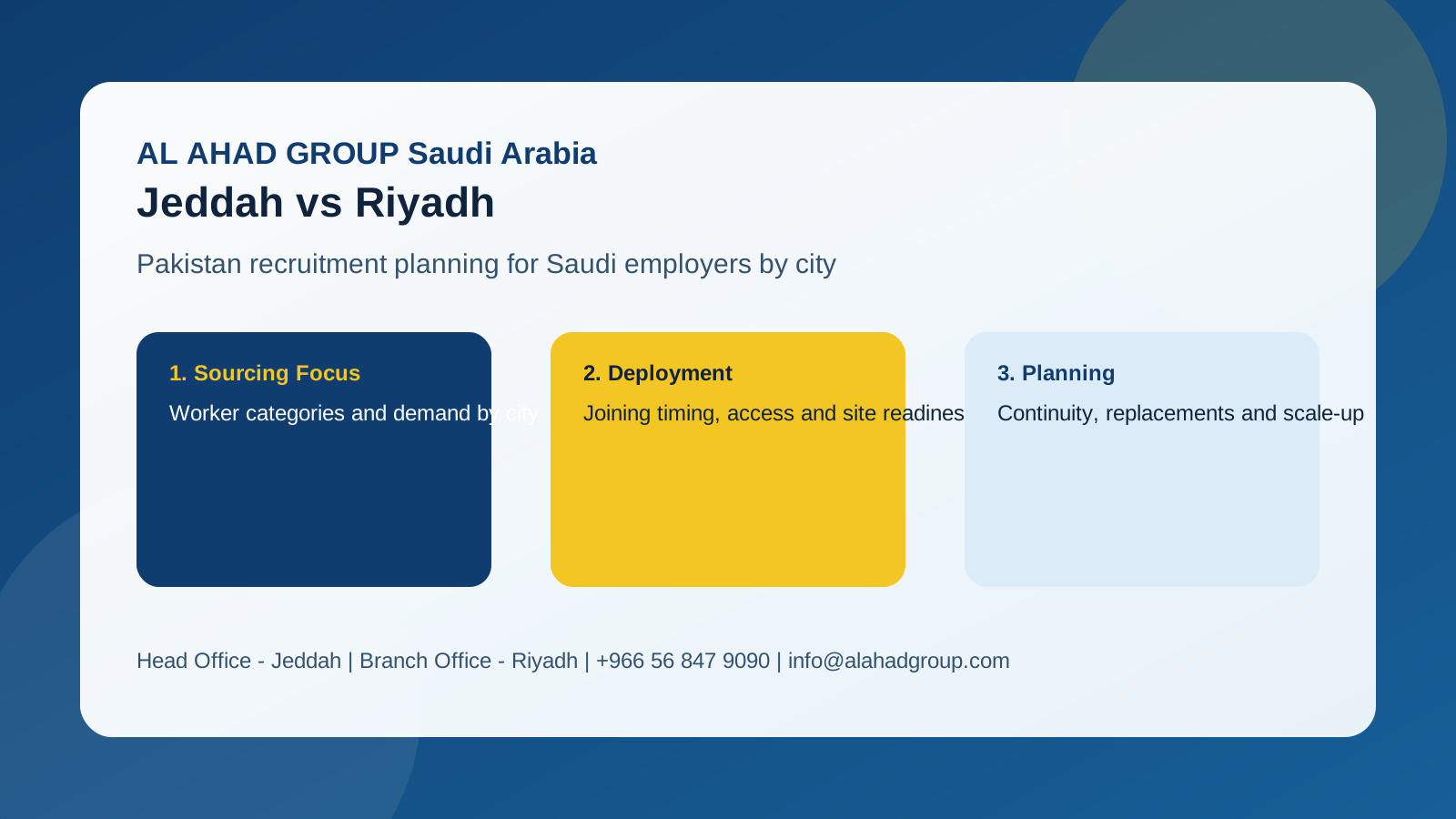
Jeddah demand is often service-led
Hospitality, logistics, facilities and commercial operations shape many Jeddah recruitment decisions.
 AL AHAD GROUP
Riyadh manpower requests should identify the worker category, headcount, district or site location, shift timing, start date, contract period and replacement needs before employer review begins.
Jeddah vs Riyadh Pakistan Recruitment Planning for Saudi Employers helps employers define the role scope, headcount, work location, shifts, screening evidence, site conditions and required timing before a quotation or shortlist is reviewed. This page explains the practical details to prepare and the checks that support a clear, documented enquiry through the existing contact route.
AL AHAD GROUP supports employers in Riyadh with practical workforce requirements for worker category, headcount, location, working days, start date, contract period and replacement expectations.
Saudi employers usually compare Jeddah and Riyadh Pakistan recruitment by checking how city demand, worker grouping, joining urgency and first-phase operations differ between the two locations.
A city comparison page helps employers move past vague overseas recruitment language and into a more credible decision about how one source-market page behaves in two different Saudi operating environments.
It also expands the internal city-authority network underneath the Pakistan cluster and makes the localized recruitment layer more defensible.
Hospitality, logistics, facilities and commercial operations shape many Jeddah recruitment decisions.
Riyadh employer needs may carry more corporate, facilities, project and distributed-operational demand.
Pakistan recruitment should be reviewed against the city environment, not in isolation.
Joining order and continuity exposure may look different in Jeddah versus Riyadh.
The lead city often shapes the sourcing and mobilization conversation first.
A cleaner comparison shows what changes and what stays constant across cities.
The city comparison is stronger when it still reflects startup and continuity risk.
Supplier evaluation becomes easier when the city-led decision support is visible.
Because many employer decisions start with choosing the right city page before supplier selection.
Treating both cities as the same demand environment usually weakens it first.
Employers planning Pakistan recruitment across Jeddah, Riyadh or both benefit most.
AL AHAD GROUP
Al Faisaliyah District, Jeddah, Saudi Arabia
Call: +966 56 847 9090
WhatsApp: +966 54 277 9090
Email: info@alahadgroup.com
AL AHAD GROUP
Riyadh, Saudi Arabia
Call: +966 56 847 9090
WhatsApp: +966 54 277 9090
Email: info@alahadgroup.com
Share service scope, worker category, headcount, site location, shift timing, contract duration, start date, replacement support, site access and safety requirements.
Send the worker categories, city mix, timing pressure and sourcing preference so the Saudi team can review the strongest city-led recruitment support.
Employer manpower support becomes clearer when worker categories, headcount, location, working days, start date and replacement expectations are reviewed together.
 Open channel