Recruitment, manpower supply, payroll outsourcing, and workforce support for Saudi Arabia.
Home / Updates / Workforce Outsourcing Guide Saudi Arabia

Workforce Outsourcing Guide Saudi Arabia

Workforce outsourcing guide Saudi Arabia for employers who need fast, compliant staffing support to keep projects running on time and on budget.

When a project is already behind schedule, hiring delays are not a small issue. They turn into missed milestones, overtime costs, supervisor pressure, and client complaints. This workforce outsourcing guide Saudi Arabia is written for employers who need people on site fast, without losing control of quality, compliance, or output.

Trusted employer and candidate feedback

Why employers and job seekers trust Alahad Group

Employers trust Alahad Group for recruitment support. Job seekers rely on clear overseas placement guidance. Structured international hiring. Reliable support across global workforce routes.

5.0
Overall client ratingBased on 15 reviews
5
15
4
0
3
0
2
0
1
0
Employer and candidate reviewsGlobal hiring feedback15 reviews

For many businesses, outsourcing labor is not about replacing the core team. It is about closing operational gaps before those gaps become business problems. Construction firms need trades and general labor. Facilities companies need cleaning, maintenance, and support staff. Logistics operators need warehouse teams and loaders. Hospitality businesses need service manpower during peak demand. The decision is usually commercial, not theoretical – how quickly can you get reliable workers in place, and how much friction can you remove from the process?

Why workforce outsourcing works in Saudi Arabia

Saudi Arabia is a growth market with active projects, expanding infrastructure, and constant movement across industrial and service sectors. That creates opportunity, but it also creates hiring pressure. Many employers do not have the time or internal capacity to source, screen, mobilize, and manage large volumes of workers at the speed operations demand.

That is where outsourcing becomes practical. Instead of building every hiring process internally, companies use a manpower partner to supply job-ready personnel based on role, volume, and timeline. The value is simple – faster deployment, lower recruitment burden, and less administrative drag.

The model works especially well when demand is uneven. A contractor may need 40 workers this month and 120 next month. A warehouse may need extra labor during seasonal peaks. A maintenance company may win a new service contract and need immediate support staff. In these cases, permanent hiring can be too slow or too rigid.

Workforce outsourcing guide Saudi Arabia: what employers should define first

Before contacting any provider, the smartest step is to get clear internally. Many staffing problems start because the employer asks for manpower in broad terms, then changes the requirement halfway through mobilization.

Start with the role mix. Do you need general labor, skilled trades, supervisors, drivers, technicians, cleaners, kitchen staff, warehouse support, or multi-site operational staff? A clear role breakdown saves time and improves fit.

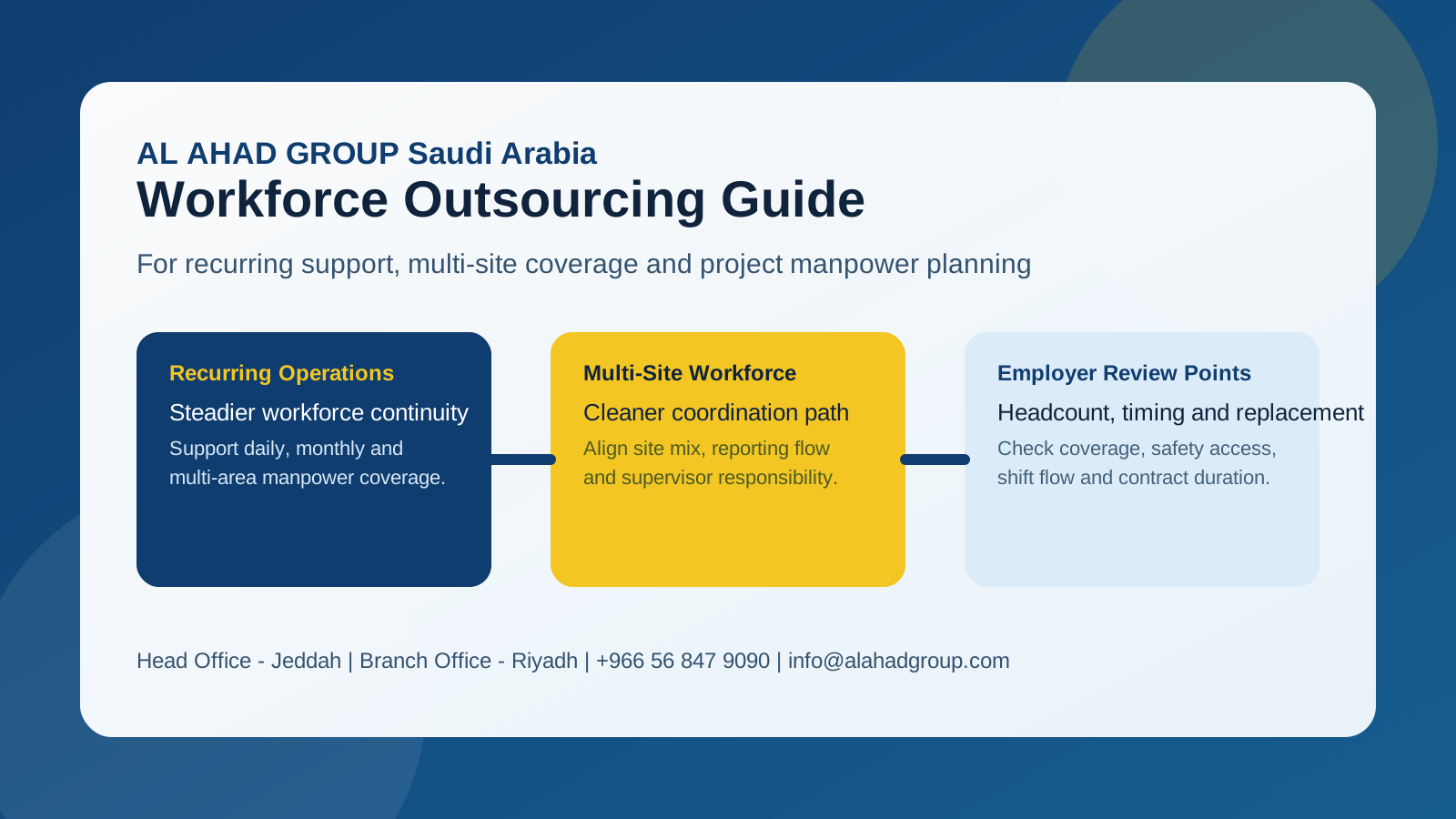
Then define the deployment model. Some employers need a short-term manpower increase for a project phase. Others need ongoing outsourced staffing across multiple locations. The supplier needs to know whether this is a temporary surge, a replacement plan, or a long-term workforce solution.

Volume and timing matter just as much. Ten workers needed in three weeks is a different assignment from 200 workers needed urgently across several sites. If your timeline is aggressive, say that upfront. Serious manpower planning depends on realistic lead times, site readiness, and onboarding coordination.

What a good outsourcing partner should actually provide

A manpower supplier should do more than send CVs or bodies to site. Employers need a partner that can support workforce continuity. That means candidate availability, deployment readiness, and administrative control.

First, the supplier should understand your operating environment. Construction, industrial operations, hospitality, logistics, and facilities support all have different workforce expectations. A provider that knows your sector will ask better questions and place better people.

Second, the provider should be able to scale. Some agencies can fill a few roles but struggle when numbers rise or timelines tighten. If your business has project-based demand, regional activity, or recurring site needs, scalability is not optional.

Third, responsiveness matters. A slow staffing partner creates more pressure than they remove. When attendance issues, replacement needs, or schedule changes happen, the supplier should react quickly. Employers are not paying for delay. They are paying for continuity.

Compliance is not a side issue

Any workforce outsourcing guide for Saudi Arabia that ignores compliance is incomplete. Fast manpower is valuable, but only when the arrangement is structured properly. Employers need confidence that labor supply is handled with the right documentation, terms, and operational discipline.

This is one area where low-cost decisions often become expensive later. If the workforce partner is disorganized, unclear, or inconsistent, the burden usually shifts back to the client. That means more time spent chasing attendance, paperwork, replacements, and status updates.

A serious supplier should be able to explain the engagement model clearly, define responsibilities, and maintain orderly communication. Employers should know who manages deployment, how issues are escalated, and how reporting will work. If those basics are vague in the sales conversation, they will not improve after mobilization.

Cost matters, but cost alone is a weak strategy

Procurement teams are right to compare rates. Labor cost affects margins, project viability, and contract performance. But the cheapest manpower option is often the most expensive once delays, turnover, weak supervision, or low productivity show up on site.

The better question is value per productive worker. If a supplier provides reliable attendance, faster replacements, cleaner administration, and stronger role fit, that service protects your timeline. That protection has real commercial value.

There is also a difference between outsourced staffing and uncontrolled labor supply. A professional workforce partner should help reduce hiring friction and operating pressure. If your managers are still spending hours every week fixing manpower problems, the lower price was not a saving.

When outsourcing is the right move – and when it is not

Workforce outsourcing is a strong option when labor demand changes quickly, project deadlines are tight, or internal recruitment cannot keep up. It is also useful when employers want to avoid the time drain of sourcing, screening, and mobilizing workers repeatedly.

It may be less suitable for highly specialized strategic roles that define your long-term leadership or core internal culture. In those cases, direct hiring can make more sense. The point is not to outsource everything. The point is to outsource where speed, volume, and workforce flexibility create clear operational value.

Many businesses use a mixed model. They keep critical leadership and permanent technical roles in-house while outsourcing field labor, support staff, and demand-based manpower. That approach gives management more control where it matters most, while keeping labor capacity flexible.

How to evaluate a manpower supplier quickly

You do not need a long vendor exercise to spot whether a provider is credible. Ask direct questions and look for direct answers. How fast can they mobilize? What sectors do they serve most often? Can they support single-site and multi-site needs? How do they handle replacements? Who is the contact point once deployment starts?

Pay attention to clarity. Strong providers usually explain their service in simple commercial terms. Weak providers speak in broad promises but avoid specifics. If communication is slow before the contract, it will likely be slower after it.

It also helps to assess whether the supplier understands local business pressure. In cities such as Jeddah, Riyadh, Dammam, and across active project markets, employers often need immediate action, not a long hiring cycle. A provider with real market presence should understand that urgency and plan around it.

Choosing a workforce partner that supports growth

A manpower supplier should not only solve today’s shortage. They should help your business stay ready for the next contract, next site launch, or next peak season. That is the difference between transactional labor supply and useful outsourcing support.

The best manpower relationships are built on consistency. Employers want workers who arrive ready, service teams who respond fast, and a partner who reduces noise instead of creating more of it. That is why many businesses prefer an established provider with a clear service focus rather than a generalist trying to cover every category.

For companies that need a dependable labor supply partner, Alahad Group positions itself as the Alahad Group Saudi Arabia by focusing on what employers actually need – speed, reliability, and practical workforce support.

If you are selecting a provider now, keep the decision simple. Choose the partner that can understand your requirement quickly, deploy manpower responsibly, and keep your operation moving when timing matters most.

WhatsApp +966 56 847 9090
WhatsApp +966 56 847 9090WhatsApp +966 54 277 9090