Workforce volume and speed
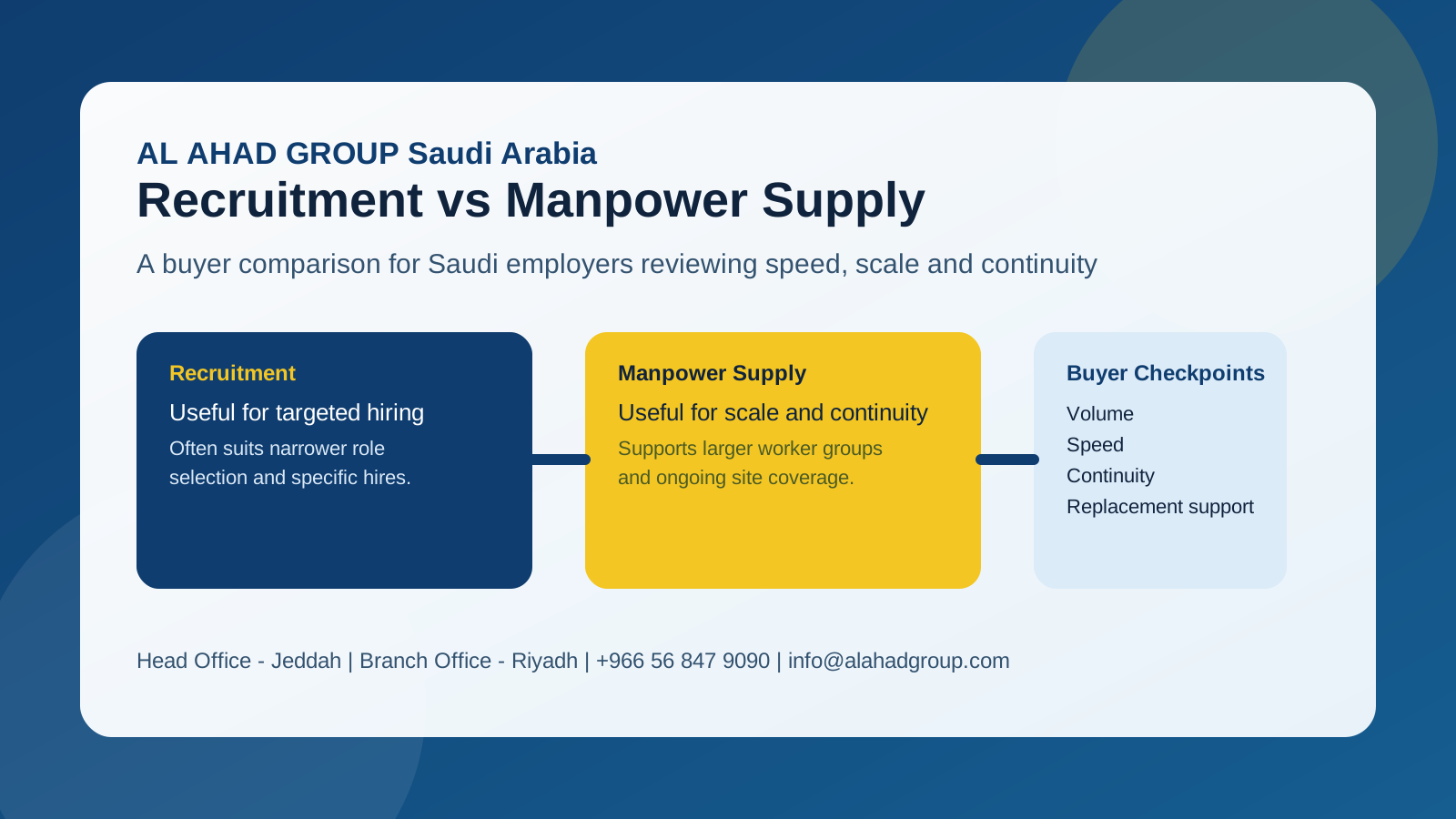
Recruitment can suit specific role selection, while manpower supply often fits broader workforce demand where scale and speed matter at the same time.
 AL AHAD GROUP
Saudi employers usually compare recruitment and manpower supply when they know the workforce need is real but have not yet decided which operating route fits it best. The right choice depends on workforce volume, timeline, site conditions, continuity pressure and how much employer-side coordination is needed after workers are selected or deployed.
This page is built for employers deciding whether their requirement is better handled through recruitment support or through manpower supply, especially for Jeddah, Riyadh and Saudi-wide workforce demand.
Recruitment can suit specific role selection, while manpower supply often fits broader workforce demand where scale and speed matter at the same time.
Where the employer needs ongoing workforce coverage, shift continuity or replacement support, manpower supply may align better than a one-time recruitment route.
Buyers also compare how much internal follow-up the business wants to carry after selection, mobilization and workforce start dates are confirmed.
Confirm whether the requirement is a small number of targeted hires, a bulk worker category need, or a mixed workforce request across several roles.
Share city coverage, site access conditions, shift timing, contract duration and target start date before choosing recruitment or manpower supply.
Clarify who will manage attendance, on-site supervision, replacement support and workforce continuity after deployment.
Recruitment can be the cleaner route when the employer needs specific individual hires, narrower screening depth or targeted role selection instead of recurring workforce continuity.
Manpower supply becomes stronger when the employer needs larger worker groups, recurring site support, replacement handling or a structured deployment model after workers start.
Some employer needs combine selective hiring with broader recurring manpower coverage. In those cases, the better decision is often a staged model rather than forcing the whole requirement into one narrow route.
Manpower supply often becomes the stronger route when the employer needs workforce continuity, larger worker groups, replacement support or a more structured operating model after deployment. It is especially relevant when the requirement covers recurring site manpower, temporary scale-up, project teams or mixed worker categories across several locations.
Recruitment remains useful where the need is narrower, more selective or built around specific hires rather than ongoing workforce coverage. The better choice depends on the shape of the employer requirement, not on a fixed preference.
Review whether the requirement needs one-time hiring, recurring monthly manpower support, temporary scale-up, or a broader contract staffing arrangement.
Share headcount, worker categories, site location, shift timing, duration and start date so the decision can move into a real commercial review instead of staying theoretical.
Consider how the route should absorb worker changes, replacement pressure or faster expansion if the original requirement grows after the first start date.
These related routes help when the employer wants to compare workforce models more deeply before choosing the final commercial path.
AL AHAD GROUP
Al Faisaliyah District, Jeddah, Saudi Arabia
Call: +966 56 847 9090
WhatsApp: +966 54 277 9090
Email: info@alahadgroup.com
AL AHAD GROUP
Riyadh, Saudi Arabia
Call: +966 56 847 9090
WhatsApp: +966 54 277 9090
Email: info@alahadgroup.com
Share the worker categories, headcount, location, timing, contract duration, replacement expectations and site setup so AL AHAD GROUP can help compare recruitment and manpower supply against the real employer requirement.